
 Free delivery in Ukraine upon full payment of the order
  Return of goods within 14 days

How to Choose the Perfect Midi Dress for Your Body Type: A Complete Guide to Style and Silhouettes
The midi dress is the epitome of elegance, but its 'intermediate' length often raises questions. How to choose a model that will emphasize the figure's advantages, rather than disrupt proportions? Our detailed guide will help you understand all the nuances. We will tell you how to determine your ...
How to Choose the Perfect Midi Dress for Your Body Type: A Complete Guide to Style and Silhouettes
A midi dress is not just a piece of clothing, but a true symbol of elegance and versatility. Its length, ending somewhere between the knee and the ankle, has the unique ability to be simultaneously modest and seductive, strict and romantic. Having revived on the runways, it has firmly established itself in the basic wardrobe, proving its timeless and trend-defying relevance. However, it is this "intermediate" length that often raises the most questions. How to find that very dress that will not "cut off" height, not disrupt proportions, but, on the contrary, emphasize all the advantages of the figure? The answer lies not in blindly following fashion, but in a deep understanding of one's own body.Dresses, Jumpsuits
Choosing a midi dress is a dialogue with yourself, your features, and your lifestyle. A properly selected model can visually elongate the silhouette, emphasize the waist, hide imperfections, and create a harmonious look in which you will feel confident and comfortable. This is an investment in your style, because one successful dress can become the basis for dozens of different outfits. In this guide, we will explore how to turn the search for the perfect dress from a complex task into an exciting process, by studying key silhouettes, important cut details, and styling techniques that work for different body types.
The Magic of Midi Length: Why It's Not Just "Medium Length"
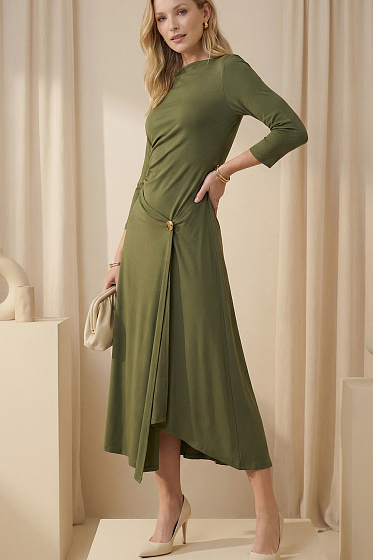
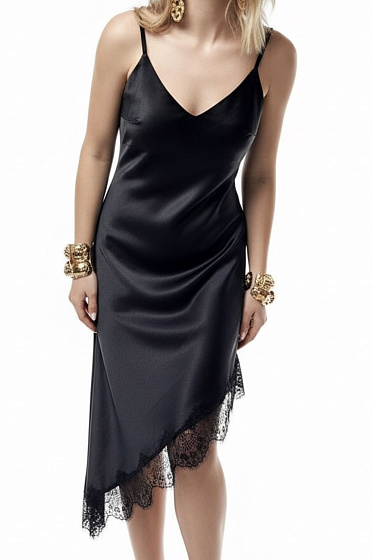
Midi length is a rather flexible and multifaceted concept. Classically, it covers the area from the bottom of the kneecap to the middle of the calf. It is this range that creates the main difficulty and, at the same time, the main potential. An incorrectly chosen hemline can visually shorten the legs, especially if you are petite. One often hears the fear that midi "cuts" the leg at the widest part of the calf, making it look bulkier. And this fear is not unfounded: a horizontal hemline indeed stops the gaze, and if it falls on the most voluminous part of the lower leg, proportions can suffer.
However, this is only one side of the coin. The secret is to find your ideal length, your "golden mean." There are several win-win options:
- Just below the knee:This length exposes most of the lower leg and is considered one of the safest. It looks elegant and strict, ideal for office and business looks, and also looks great on petite women.
- At the narrowest part of the calf:Find the most graceful point between the calf and the ankle — this is where the hem will create the most flattering effect. This length visually makes the legs slimmer and longer, without disrupting the vertical line of the silhouette.
- Just above the ankle (tea-length):A long midi, almost reaching the ankle, creates a very refined and elongated silhouette. It looks especially striking in motion and is suitable for creating romantic and evening looks.
In addition, the cut of the dress itself, the presence of a slit, asymmetry, and properly chosen footwear can completely neutralize any undesirable effect. A slit on the side or front instantly breaks the monolithic nature of the fabric, creates a vertical line, and adds dynamism, making the legs visually longer. Midi is a canvas on which you paint your silhouette, and knowledge of composition rules plays a key role here.Jumpsuits
Defining Your Body Type: The Key to the Perfect Dress
Before diving into the world of styles, it's important to take a step back and objectively look at your figure. It's not about labeling, but about understanding your proportions: the ratio of shoulders, waist, and hips. This knowledge is your main tool in choosing a dress that will fit flawlessly. Conventionally, five main types can be distinguished, but remember that pure types are rare, and most often we deal with mixed variations.
The main task is to create visual balance and bring the silhouette closer to harmonious "hourglass" proportions.
- «Pear» (Triangle):Hips are noticeably wider than shoulders, a clearly defined waist. Your goal is to add volume to the upper body (shoulders, chest) and delicately conceal hip volume.
- «Inverted Triangle»:Shoulders and chest are wider than hips. The task is to shift the accent downwards, adding volume to the skirt, and visually narrow the shoulder girdle.
- «Rectangle»:Shoulders, waist, and hips are approximately the same width, curves are weakly expressed. The goal is to create the illusion of a thinner waist and feminine curves.
- «Apple» (Circle):The largest volume is concentrated in the waist and abdomen area, while the legs are often slender. The main task is to elongate the silhouette, define the waist (often with the help of a high line), and emphasize assets (legs, décolleté).
- «Hourglass»:Shoulders and hips are approximately equal in width with a thin, clearly defined waist. You are lucky — your task is only to emphasize the natural harmony of the figure.
Midi dress silhouettes for different body types
Now that we have defined the goals, let's consider which silhouettes will help achieve them. These recommendations should not be taken as strict rules, but rather as a starting point for experimentation.
- A-line silhouette:A dress with a fitted bodice and a skirt that gradually widens towards the bottom. This is a real find for «Pear» body types, as it conceals voluminous hips and balances proportions. It also works well for «Rectangles», creating a feminine curve, and for «Apples», if the waistline is high.
- Wrap dress:The legendary invention of Diane von Fürstenberg — a universal soldier in the world of dresses. The V-neck elongates the neck, the diagonal lines of the wrap visually slim, and the belt emphasizes the waist at its narrowest point. Suitable for absolutely all body types.
- Sheath dress:A form-fitting dress that follows the curves of the body. Ideal for «Hourglasses». Women with other body types can also wear a sheath dress, but it's worth paying attention to details. For example, draping in the abdominal area will help an «Apple» figure, and a peplum — a «Rectangle».
- Straight cut:Excellent for «Rectangle» and «Apple» figures, as it does not emphasize the waist and creates a strict vertical that slims. It can be complemented with a belt to change the silhouette.
- Shirt dress:Often has a straight cut but is complemented by a belt. This makes it versatile: it can be worn loosely or to emphasize the waist, which suits almost everyone. Choose models made from flowing fabric for a softer silhouette or from dense cotton for a structured look.
- Bias cut:Dresses cut on the bias create an incredibly flexible and flowing silhouette. They gently outline the figure without clinging tightly. This technique is especially good for creating evening and romantic looks. For example,Chocolate silk dress with a V-neckdemonstrates how the bias cut allows the fabric to move beautifully when walking, creating a sophisticated and flowing silhouette that delicately emphasizes curves.
Details that make all the difference: Necklines, sleeves, and draperies
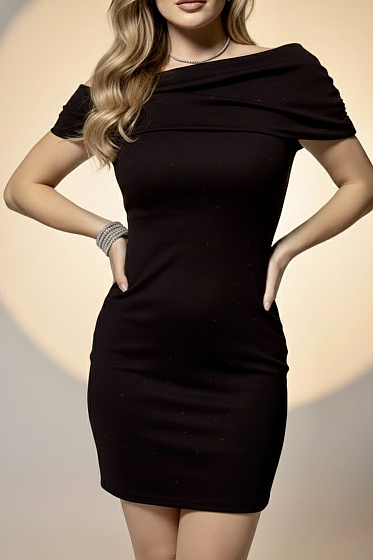
The secret to a perfect fit lies in the details. They can shift accents, correct proportions, and complete the look. When choosing a midi dress, pay attention to the neckline, sleeve shape, and the presence of decorative elements.Sportswear
Neckline:
- V-neck:Visually lengthens the neck and elongates the entire silhouette. Ideal for “Apple”, “Inverted Triangle”, and women with a full bust.
- Square (carré):Beautifully emphasizes the collarbones and visually widens the shoulder line, which helps balance full hips for “Pear” body types.
- Boat neck:Also widens the shoulder line, creating a horizontal line. An excellent choice for “Pear” body types.
- Asymmetrical:Draws attention to the shoulders and collarbones, adds dynamism to the look, and distracts from problem areas.
Sleeves:
- Puff or voluminous sleeves:Add volume to the shoulders, which is ideal for a "Pear" figure.
- 3/4 Sleeve:Considered one of the most successful, as it reveals elegant wrists and emphasizes the waist.
- Flared sleeves (bell sleeves):Help balance wide hips, creating harmony between the top and bottom.
Drapery and decor:
Drapery is another powerful tool. It can both add volume where it is lacking (for example, on the chest) and skillfully conceal it. Asymmetrical drapery in the waist and abdomen area creates diagonal lines that visually slim and mask imperfections. A great example is —Olive knitted midi dress with drapery, where this cut element works to create a more refined and elegant silhouette, and a small slit adds lightness to the look and does not restrict movement.In Ukrainian
Midi dress styling: From office to date
Choosing a dress is only half the battle. It is equally important to style it correctly. The same outfit can look completely different depending on shoes, accessories, and outerwear.
Footwear — the basis of proportions:
The key element is footwear. To avoid shortening your legs, choose shoes that leave the instep open (classic pumps, strappy sandals) or match the color of your skin tone. A pointed toe always works to lengthen. In the cold season, boots whose shafts go under the hem of the dress create a single vertical and look very stylish. Avoid ankle boots that end at the ankle if you wear them with bare legs — they can "cut" the leg. For bold and modern looks, sneakers or chunky boots are also suitable — they create an interesting contrast with a feminine dress.
Outerwear and accessories: SALE
Outerwear also plays an important role. Cropped jackets, denim jackets, or biker jackets that end at the waistline work great with A-line dresses and fitted models. A long coat or trench coat, which either completely covers the dress or matches its length, creates an elegant and cohesive look. However, with a length to mid-thigh, it is worth being more careful — it can "cut" the figure into several horizontal blocks. A belt or sash is your best friend for creating an accent on the waist, especially with straight-cut dresses or shirt dresses.
Recently, I saw a girl in a cafe: she was wearing a simple silk midi slip dress, but over it — a voluminous knitted sweater, and on her feet — white sneakers. This look seemed so relaxed and at the same time thoughtful that it once again proved: rules exist to be creatively broken. Experiment with textures and styles to find what truly reflects you.
Frequently asked questions about choosing a midi dress
Even after a detailed analysis, some doubts remain. We have collected the most popular questions and tried to give brief and useful answers to them.
- Is a midi dress suitable for short girls? Absolutely! The main thing is to follow a few rules: choose models with a high waist, prefer monochrome looks, wear heels or pointed-toe shoes. Vertical lines in the print or cut (for example, a slit, a row of buttons) will also work for you. Avoid overly voluminous skirts and large prints.
- Which fabric to choose for a midi dress? Everything depends on the season and occasion. For everyday wear and the office, dense knitwear, cotton, viscose, denim are ideal — they are comfortable and hold their shape well. For an evening out or a special occasion, choose silk, satin, satin, velvet. These flowing fabrics create a luxurious and elegant look.
- How to choose a print for a midi dress? Print is a powerful correction tool. Vertical stripes elongate the silhouette. Small floral or geometric prints (polka dots, plaid) are versatile. Large and bright prints can add volume, so it's best to use them strategically — in the area you want to emphasize.
- What underwear to wear with a form-fitting midi dress? The best choice is seamless nude-colored underwear. It will be invisible even under thin and light fabric. To create a smoother silhouette, shapewear can be used. If the dress has drapery or is made of thick material, the requirements for underwear may be less strict.
Ultimately, the most important thing when choosing a dress is your own feelings. The ideal midi dress is one in which you feel not only beautiful, but also confident, free, and ready for any events of the day. Use our tips as a compass, but always trust your inner voice and personal comfort, because true style begins with self-love.
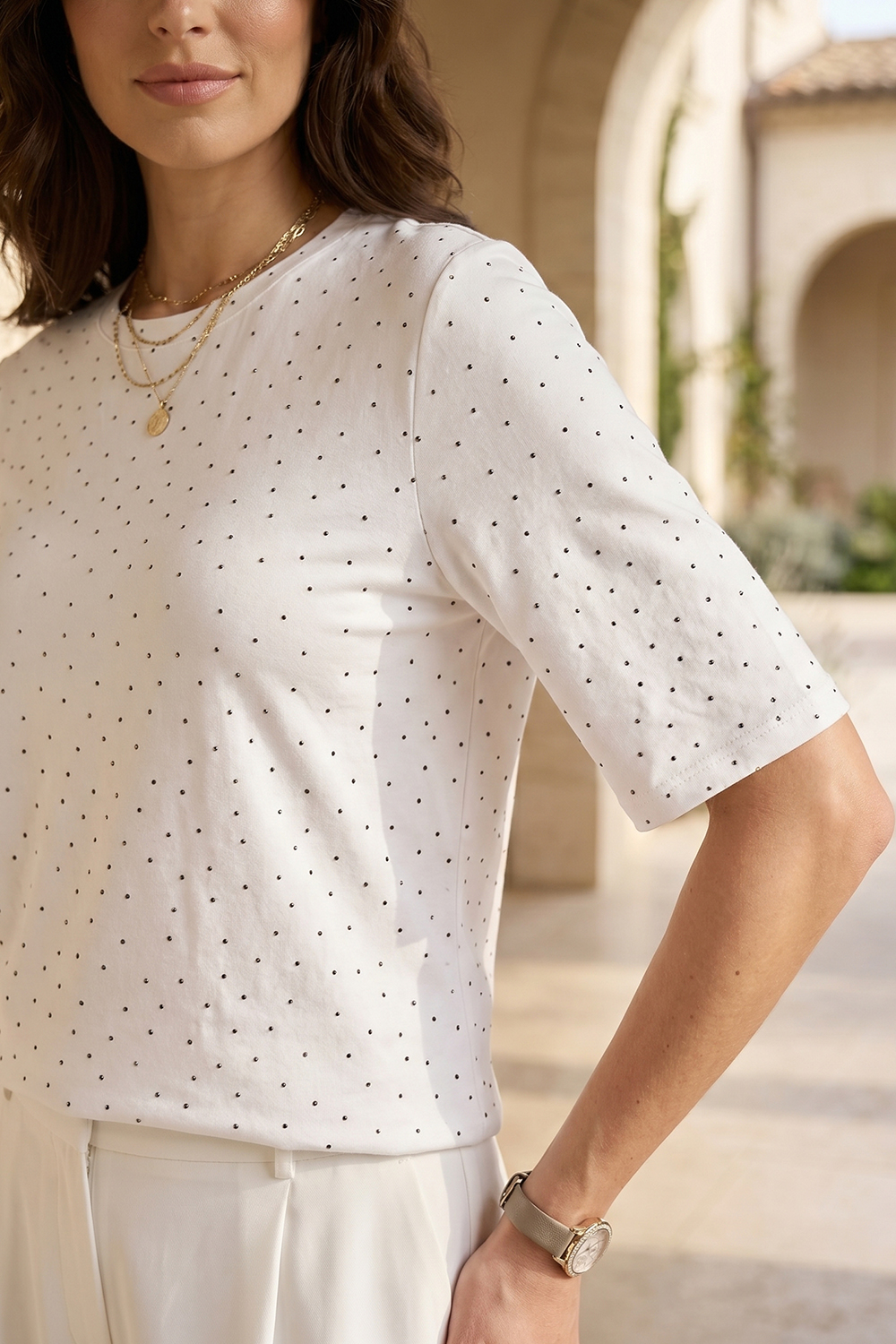 The Statement Top: How Unexpected Details Elevate Your Everyday Style
A practical editorial guide to wearing t-shirts, tops, bodysuit, longsleeves with more balance and repeatability.
The Statement Top: How Unexpected Details Elevate Your Everyday Style
A practical editorial guide to wearing t-shirts, tops, bodysuit, longsleeves with more balance and repeatability.
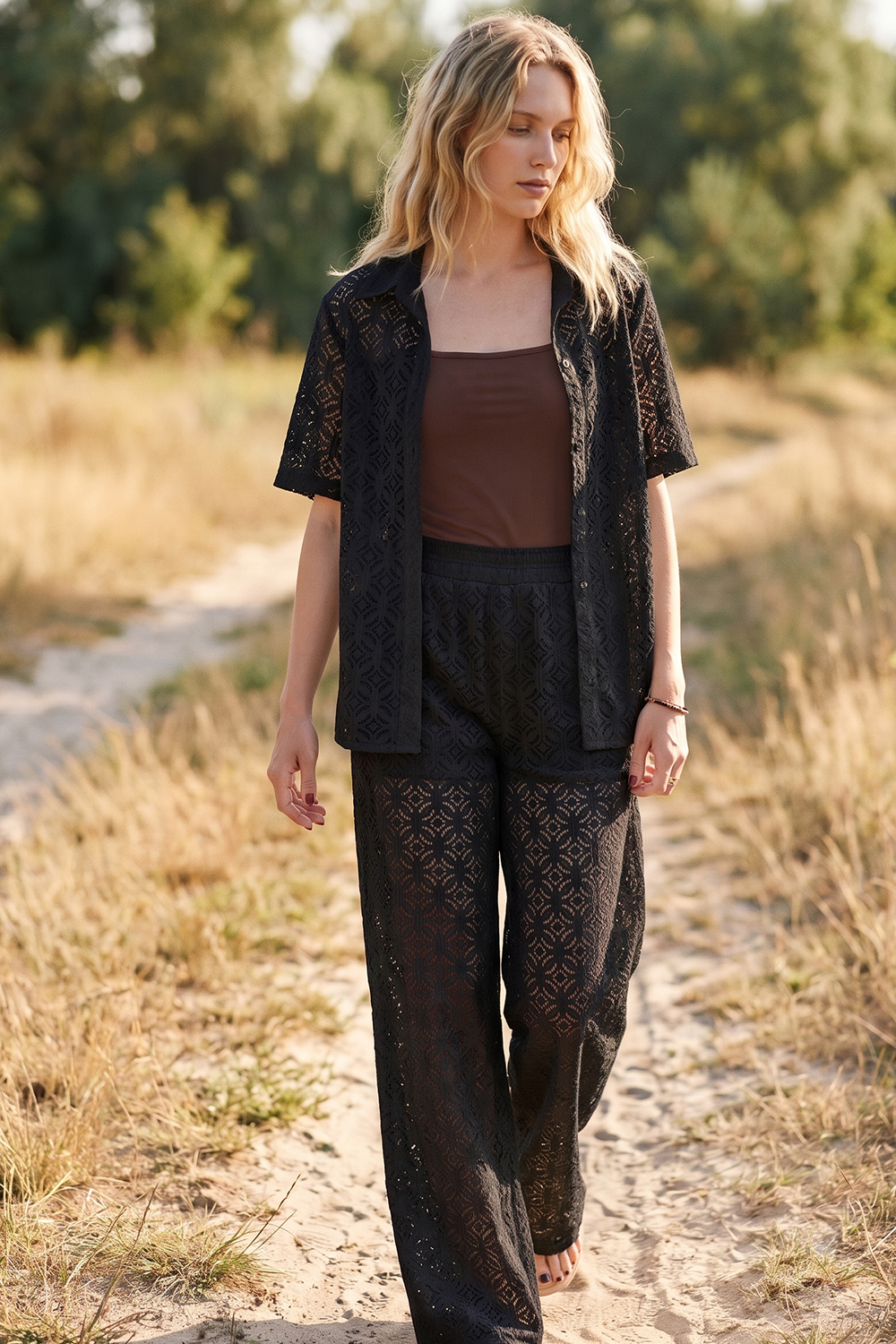 Sportswear's Urban Takeover: Elevating Everyday Style
A practical editorial guide to wearing sportswear with more balance and repeatability.
Sportswear's Urban Takeover: Elevating Everyday Style
A practical editorial guide to wearing sportswear with more balance and repeatability.
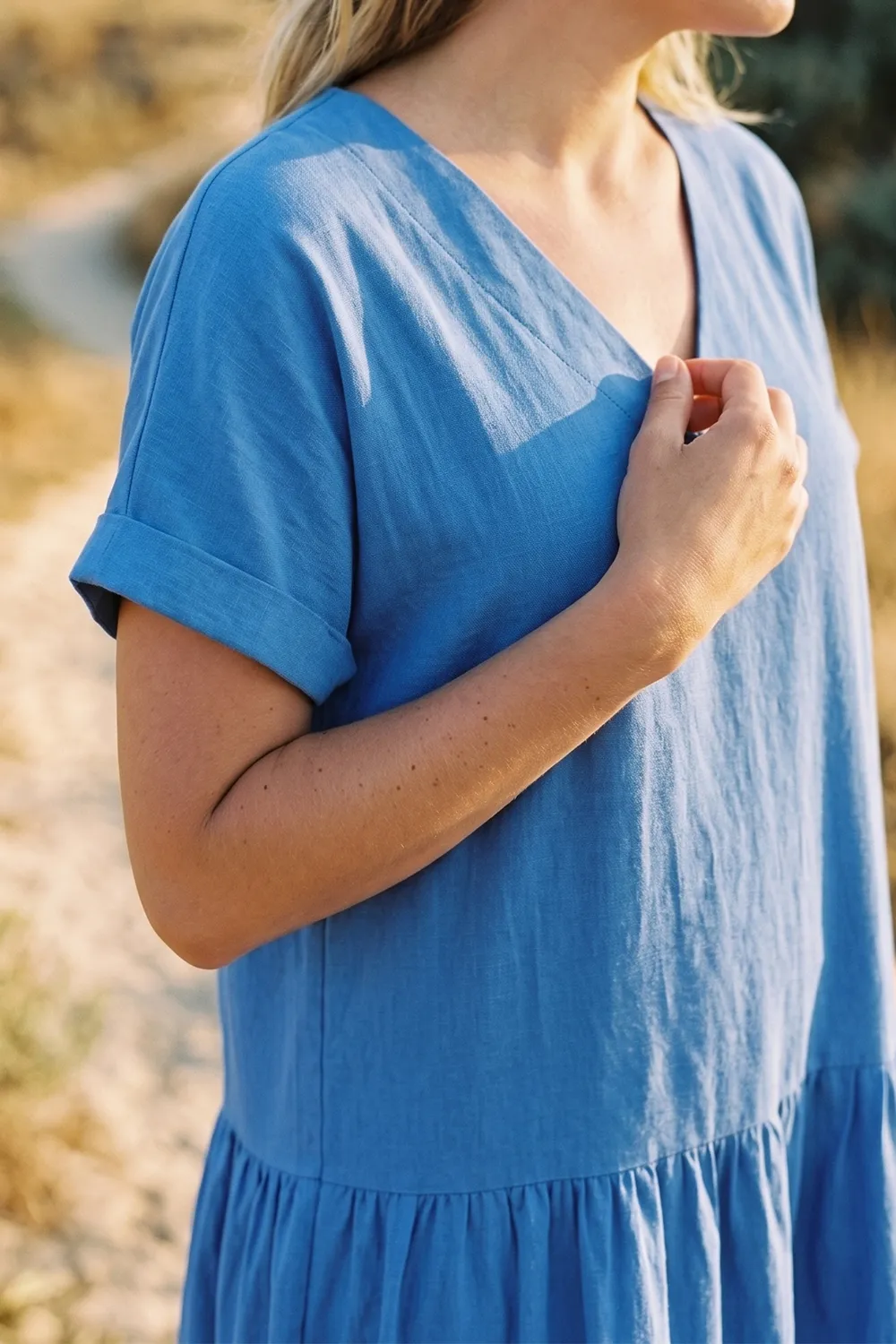 Achieving the Perfect Fit: A Guide to Dress and Jumpsuit Lengths
A practical editorial guide to wearing dresses and jumpsuits with more balance and repeatability.
Achieving the Perfect Fit: A Guide to Dress and Jumpsuit Lengths
A practical editorial guide to wearing dresses and jumpsuits with more balance and repeatability.