
 Free delivery in Ukraine upon full payment of the order
  Return of goods within 14 days

One Blazer, Endless Looks: Your Guide to Year-Round Style
A practical editorial guide to wearing blazers and suits with balance and versatility.
One Blazer, Endless Looks: Your Guide to Year-Round Style
Where silhouette decisions should start
The blazers and suits category is most impactful when decisions prioritize proportion over decorative details, as a garment's overall movement and fit are perceived long before specific embellishments. This is why proportion, length, and shoulder line are crucial: they determine if an outfit maintains its composure after commuting, sitting, layering, and moving throughout a busy day. When the silhouette is clear, the piece pairs effortlessly with flats, a streamlined outer layer, and a medium-sized bag, rather than requiring a high-effort, specific styling scenario. In practice, blazers and suits should be evaluated against a real wardrobe routine, not just an idealized image. When a piece's role is clear from the outset, it integrates naturally with outerwear, suits, trousers, and other wardrobe categories, preventing the look from becoming a disjointed catalog collage. This approach creates a deliberate, polished, and easily repeatable outcome.
A helpful exercise is to review Blazers and Suits, focusing on how proportion, length, and shoulder line are handled, rather than solely reacting to color or the image's mood. From this perspective, it becomes easier to assess whether the piece complements the outerwear, suits, and trousers already in your wardrobe, or if it demands overly specific accessories to work. Concrete examples, such as a cropped black blazer with gold buttons and pleats on the back, or straight-leg chocolate trousers, are most useful for understanding fit logic, length balance, and emphasis level, rather than as literal outfits to copy. Once this logic is clear, the look becomes easier to repeat without fatigue or needing to rebuild the entire styling formula each time. This is the shift that transforms the category from a fleeting attraction into a reliable wardrobe tool.
How fabric and texture change the outcome
The blazers and suits category is most impactful when decisions prioritize proportion over decorative details, as a garment's overall movement and fit are perceived long before specific embellishments. This is why fabric movement and perceived density are crucial: they determine if an outfit maintains its composure after commuting, sitting, layering, and moving throughout a busy day. When the silhouette is clear, the piece pairs effortlessly with flats, a streamlined outer layer, and a medium-sized bag, rather than requiring a high-effort, specific styling scenario. In practice, blazers and suits should be evaluated against a real wardrobe routine, not just an idealized image. When a piece's role is clear from the outset, it integrates naturally with outerwear, suits, trousers, and other wardrobe categories, preventing the look from becoming a disjointed catalog collage. This approach creates a deliberate, polished, and easily repeatable outcome.
A helpful exercise is to review this piece, focusing on how fabric movement and perceived density are handled, rather than solely reacting to color or the image's mood. From this perspective, it becomes easier to assess whether the piece complements the outerwear, suits, and trousers already in your wardrobe, or if it demands overly specific accessories to work. Concrete examples, such as a cropped black blazer with gold buttons and pleats on the back, or straight-leg chocolate trousers, are most useful for understanding fit logic, length balance, and emphasis level, rather than as literal outfits to copy. Once this logic is clear, the look becomes easier to repeat without fatigue or needing to rebuild the entire styling formula each time. This is the shift that transforms the category from a fleeting attraction into a reliable wardrobe tool.
What makes the outfit feel composed
The blazers and suits category is most impactful when decisions prioritize proportion over decorative details, as a garment's overall movement and fit are perceived long before specific embellishments. This is why the role of shoes, bags, and outer layers is crucial: they determine if an outfit maintains its composure after commuting, sitting, layering, and moving throughout a busy day. When the silhouette is clear, the piece pairs effortlessly with flats, a streamlined outer layer, and a medium-sized bag, rather than requiring a high-effort, specific styling scenario. In practice, blazers and suits should be evaluated against a real wardrobe routine, not just an idealized image. When a piece's role is clear from the outset, it integrates naturally with outerwear, suits, trousers, and other wardrobe categories, preventing the look from becoming a disjointed catalog collage. This approach creates a deliberate, polished, and easily repeatable outcome.
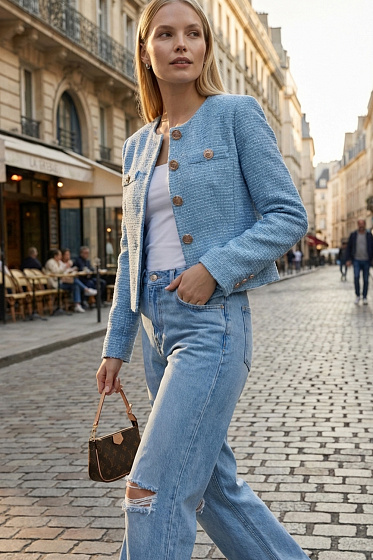
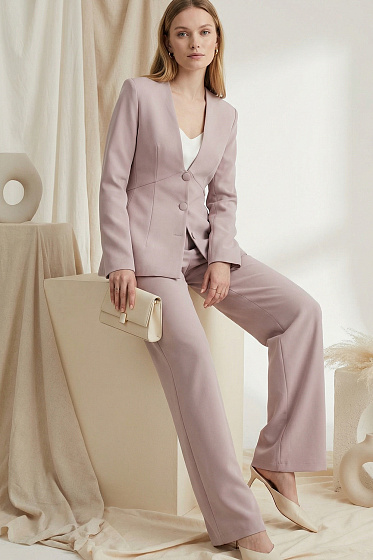
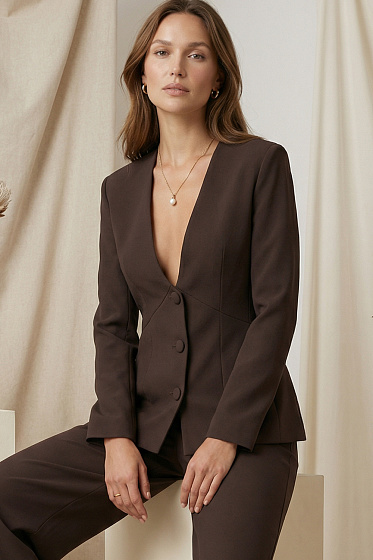
A helpful exercise is to review Outerwear, Suits, and Trousers, focusing on how the role of shoes, bags, and outer layers is handled, rather than solely reacting to color or the image's mood. From this perspective, it becomes easier to assess whether the piece complements the outerwear, suits, and trousers already in your wardrobe, or if it demands overly specific accessories to work. Concrete examples, such as a cropped black blazer with gold buttons and pleats on the back, or straight-leg chocolate trousers, are most useful for understanding fit logic, length balance, and emphasis level, rather than as literal outfits to copy. Once this logic is clear, the look becomes easier to repeat without fatigue or needing to rebuild the entire styling formula each time. This is the shift that transforms the category from a fleeting attraction into a reliable wardrobe tool.
How the piece works across real scenarios
The blazers and suits category is most impactful when decisions prioritize proportion over decorative details, as a garment's overall movement and fit are perceived long before specific embellishments. This is why transitioning from a calm daytime setting to a sharper evening mood is crucial: it determines if an outfit maintains its composure after commuting, sitting, layering, and moving throughout a busy day. When the silhouette is clear, the piece pairs effortlessly with flats, a streamlined outer layer, and a medium-sized bag, rather than requiring a high-effort, specific styling scenario. In practice, blazers and suits should be evaluated against a real wardrobe routine, not just an idealized image. When a piece's role is clear from the outset, it integrates naturally with outerwear, suits, trousers, and other wardrobe categories, preventing the look from becoming a disjointed catalog collage. This approach creates a deliberate, polished, and easily repeatable outcome.
A helpful exercise is to review this piece, focusing on how the transition from a calm daytime setting to a sharper evening mood is handled, rather than solely reacting to color or the image's mood. From this perspective, it becomes easier to assess whether the piece complements the outerwear, suits, and trousers already in your wardrobe, or if it demands overly specific accessories to work. Concrete examples, such as a cropped black blazer with gold buttons and pleats on the back, or straight-leg chocolate trousers, are most useful for understanding fit logic, length balance, and emphasis level, rather than as literal outfits to copy. Once this logic is clear, the look becomes easier to repeat without fatigue or needing to rebuild the entire styling formula each time. This is the shift that transforms the category from a fleeting attraction into a reliable wardrobe tool.
Mistakes that flatten the whole impression
The blazers and suits category is most impactful when decisions prioritize proportion over decorative details, as a garment's overall movement and fit are perceived long before specific embellishments. This is why excess detail, awkward length, and random combinations are crucial: they determine if an outfit maintains its composure after commuting, sitting, layering, and moving throughout a busy day. When the silhouette is clear, the piece pairs effortlessly with flats, a streamlined outer layer, and a medium-sized bag, rather than requiring a high-effort, specific styling scenario. In practice, blazers and suits should be evaluated against a real wardrobe routine, not just an idealized image. When a piece's role is clear from the outset, it integrates naturally with outerwear, suits, trousers, and other wardrobe categories, preventing the look from becoming a disjointed catalog collage. This approach creates a deliberate, polished, and easily repeatable outcome.
A helpful exercise is to review this piece, focusing on how excess detail, awkward length, and random combinations are handled, rather than solely reacting to color or the image's mood. From this perspective, it becomes easier to assess whether the piece complements the outerwear, suits, and trousers already in your wardrobe, or if it demands overly specific accessories to work. Concrete examples, such as a cropped black blazer with gold buttons and pleats on the back, or straight-leg chocolate trousers, are most useful for understanding fit logic, length balance, and emphasis level, rather than as literal outfits to copy. Once this logic is clear, the look becomes easier to repeat without fatigue or needing to rebuild the entire styling formula each time. This is the shift that transforms the category from a fleeting attraction into a reliable wardrobe tool.
FAQ
How do you know if a blazer or suit doesn't feel overloaded?
First, check the proportion, length, and layering: if the piece works with simple shoes and doesn't require constant accessory intervention, the balance is likely good.
Can blazers and suits be effectively paired with outerwear, other suits, and trousers?
Yes, as long as their roles remain distinct. One category should define the overall line, while the other supports it with structure or complementary layering, rather than competing for total focus.
Why review examples such as a cropped black blazer with gold buttons and pleats on the back?
Not to copy a ready-made look, but to assess fit, length, detail scale, and whether the piece can integrate into your real wardrobe rhythm.
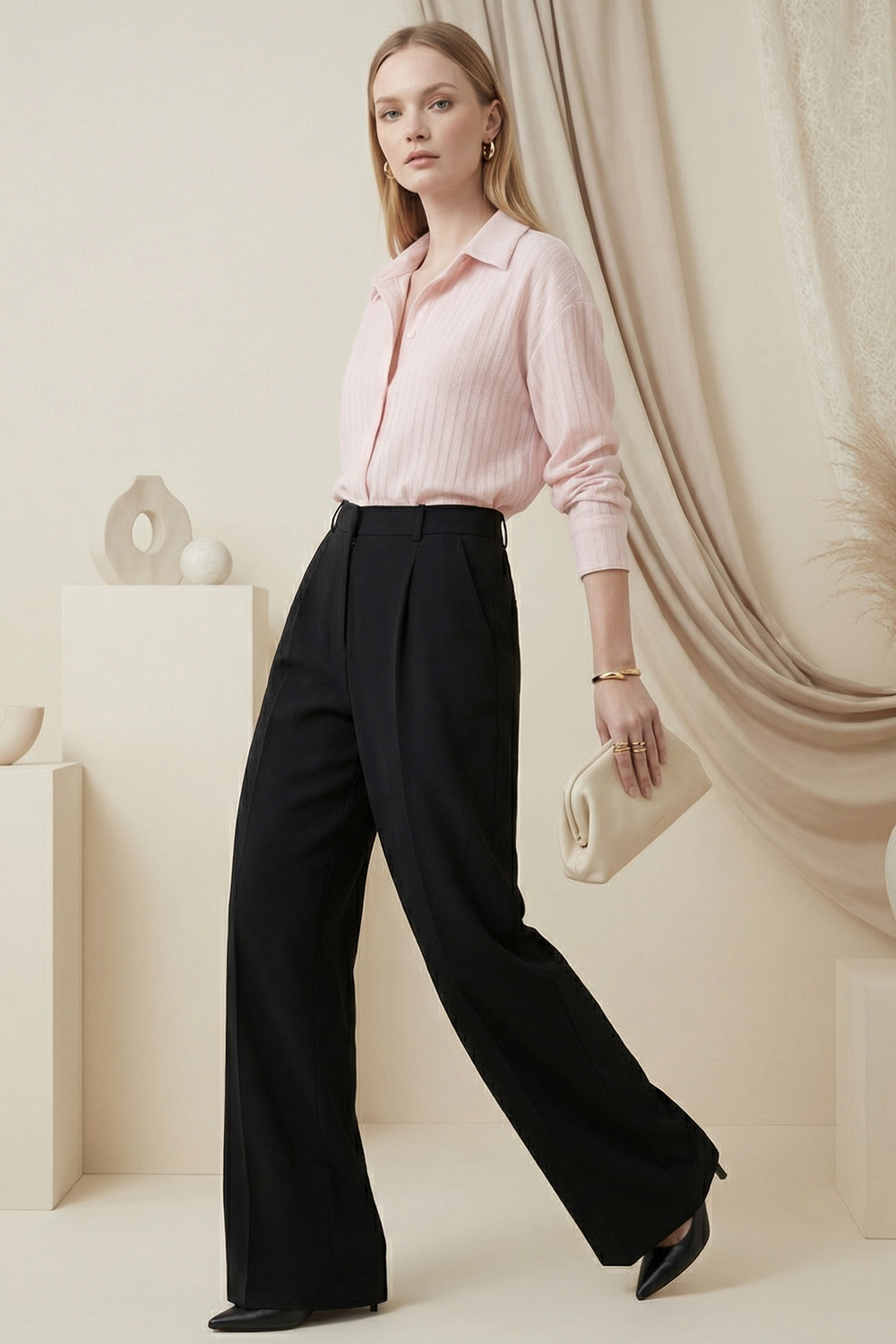 The Art of Layering: Stylish Shirt and Knitwear Combinations
Discover the art of layering. Learn how to properly combine shirts and blouses with cardigans and sweaters to create stylish, comfortable, and dyna...
The Art of Layering: Stylish Shirt and Knitwear Combinations
Discover the art of layering. Learn how to properly combine shirts and blouses with cardigans and sweaters to create stylish, comfortable, and dyna...
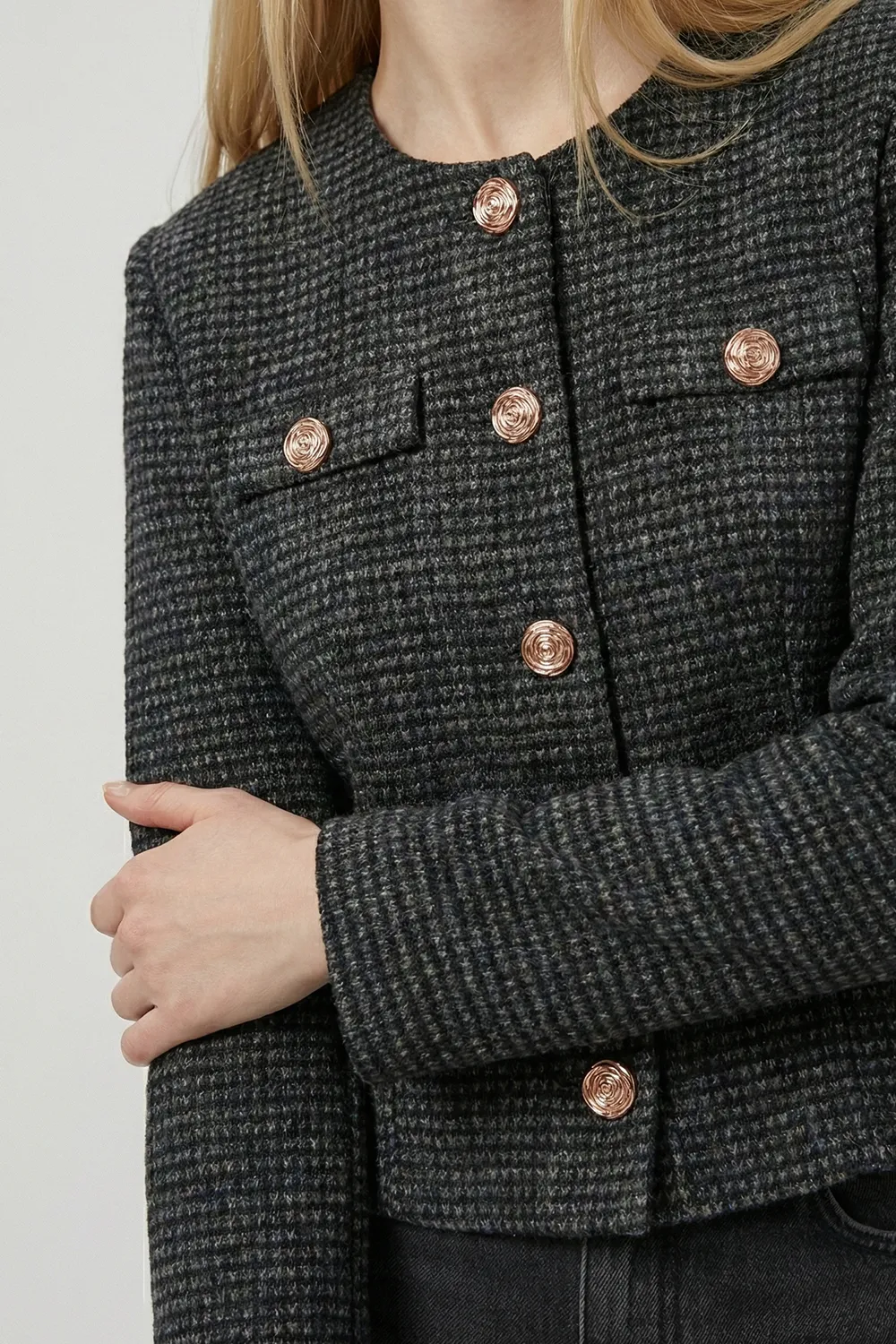 Beyond the Boardroom: Styling Blazers and Trousers for Everyday Chic
A practical editorial guide to wearing blazers and tailored pieces with more balance and repeatability.
Beyond the Boardroom: Styling Blazers and Trousers for Everyday Chic
A practical editorial guide to wearing blazers and tailored pieces with more balance and repeatability.
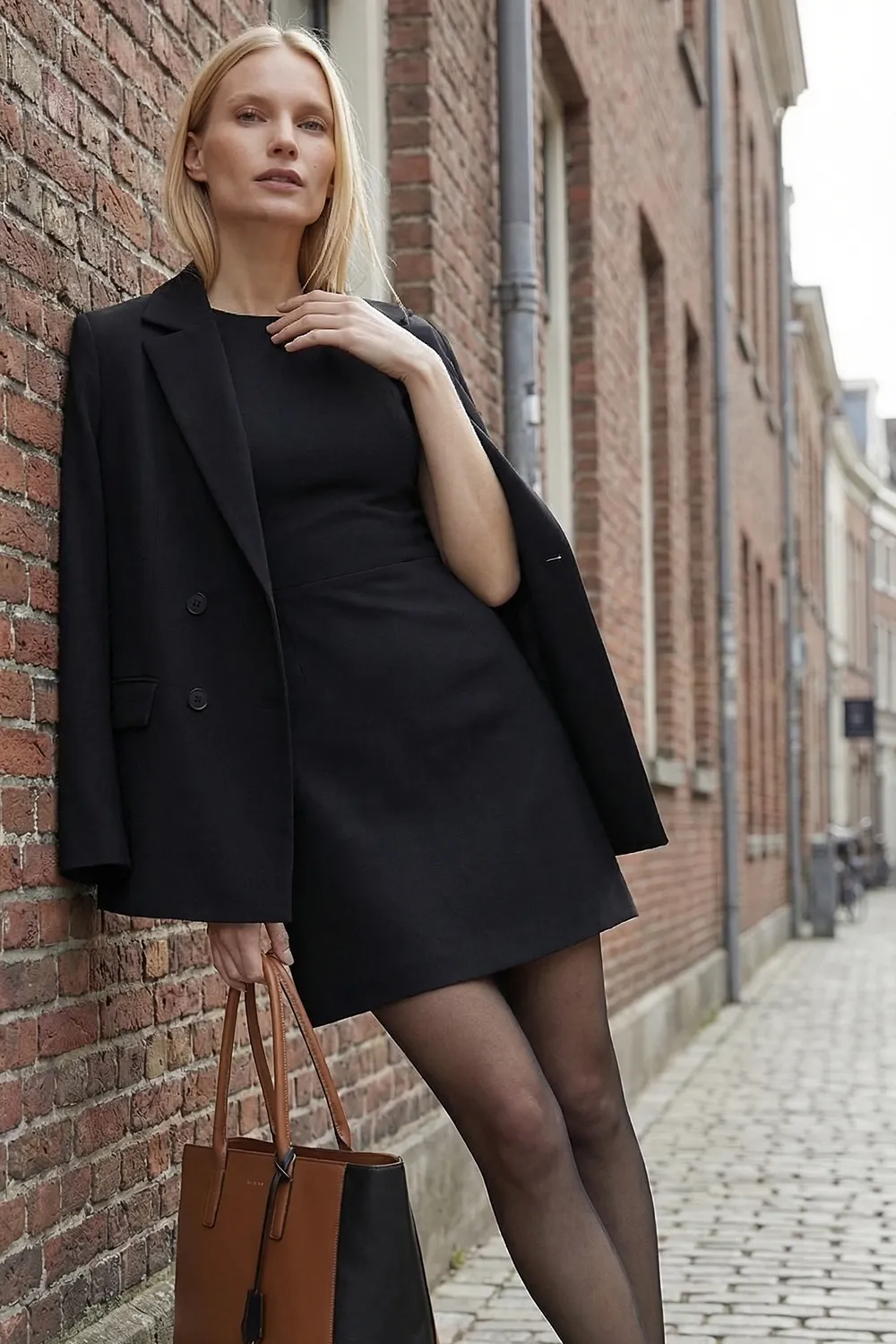 Grace in Motion: Dresses and Jumpsuits for Effortless Style
Discover how the right cut and fabric of a dress or jumpsuit can offer freedom of movement without sacrificing elegance. This article is your guide...
Grace in Motion: Dresses and Jumpsuits for Effortless Style
Discover how the right cut and fabric of a dress or jumpsuit can offer freedom of movement without sacrificing elegance. This article is your guide...