
 Free delivery in Ukraine upon full payment of the order
  Return of goods within 14 days

Fabric's Foundation: Shaping Dress and Jumpsuit Style and Comfort
Discover how the choice of fabric for a dress or jumpsuit impacts your style, comfort, and the appropriateness of your outfit. Our guide will help you understand material properties and make informed purchases for any season and occasion.
Fabric's Foundation: Shaping Dress and Jumpsuit Style and Comfort
Why Fabric is the Foundation of Your Look
When choosing a new dress or jumpsuit, we often first pay attention to the style, color, and cut. However, it is the material from which the item is sewn that is its soul. Fabric determines how the clothing will fit your figure, how it will drape with movement, how comfortable you will feel throughout the day, and ultimately, what impression your look will make. The same design, made from flowing silk or dense cotton, will look completely different. Understanding fabric properties is key to creating a harmonious and functional wardrobe where every item works for you.
Popular Fabrics for Dresses and Their Properties
The world of fabrics is vast, but for dresses and jumpsuits, several key materials are most often used, each with its own character. Cotton and linen are natural, breathable fabrics, ideal for summer heat. They are hypoallergenic and pleasant against the skin, but prone to wrinkling. Viscose, made from wood pulp, combines the best qualities of natural and synthetic fibers: it is soft, hygroscopic, and drapes beautifully. Silk is synonymous with luxury; its smooth texture and delicate sheen make any dress elegant. Modern blended and synthetic fabrics, such as polyester and spandex, are valued for their practicality: they are almost wrinkle-free, durable, and often elastic, ensuring a perfect fit.
Choosing the Right Fabric for the Occasion
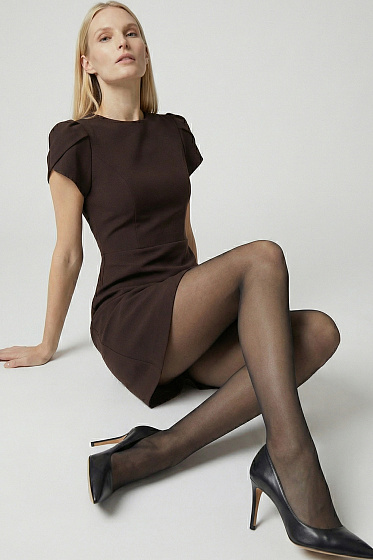
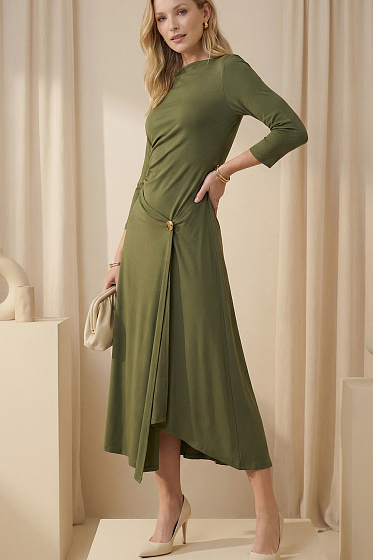
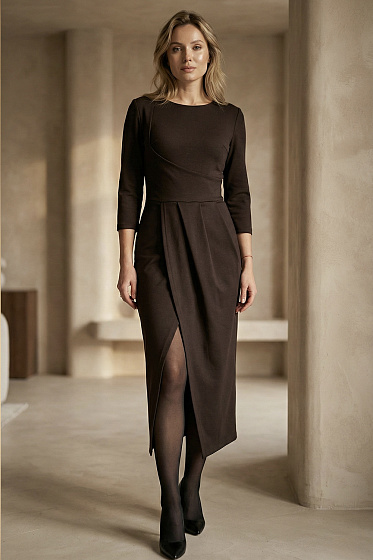
The appropriateness of an outfit largely depends on the right fabric. For everyday looks and casual outings, there's nothing better than light and comfortable materials like cotton or viscose. If you're looking for an office outfit, pay attention to dense, structured fabrics that hold their shape well and look presentable. For example, suiting knitwear or high-quality 'Barbie' suiting fabric creates a clear silhouette and doesn't distract with excessive fluidity, as seen in
. For an evening out or a formal event, materials with a more expressive texture are suitable: flowing silk, satin, or elastic fabrics that perfectly hug the figure. For example, a form-fitting dress made of biflex will highlight the silhouette's advantages and provide freedom of movement, which is important for a long evening. At the same time, for creating an elegant and restrained look for a business meeting or dinner,
Seasonal Factor: Which Fabric to Choose for Different Weather
Climate dictates its rules when choosing clothes. In summer, prefer natural, breathable fabrics: linen, cotton, staple, and thin viscose. They allow the skin to breathe and provide a feeling of coolness even on a hot day. In the off-season, autumn and spring, denser materials are relevant. Suiting knitwear, thick viscose, or dresses made from polyester-based blended fabrics will be appropriate — they are warm enough but do not create a greenhouse effect. For the cold season, choose dresses made of wool, cashmere, or thick knitwear. They will not only keep you warm but also create a cozy and stylish look. You can find the entire range of current models in our catalog of
Care Rules: How to Extend the Life of Your Favorite Items
The longevity of a dress directly depends on its care. Always pay attention to the manufacturer's care label. General rules are simple: natural fabrics like cotton and linen can be machine washed on a delicate cycle, but they require ironing. Silk and thin viscose are best hand-washed in cool water or dry-cleaned. Items made from blended and synthetic fabrics are generally the most unpretentious: they are easy to wash, dry quickly, and often do not require ironing. For example,
made of biflex or a dress made of suiting knitwear will retain its original appearance for a long time if a simple washing temperature regimen is followed. Gentle care is an investment in your wardrobe.
FAQ
Which fabric for a dress wrinkles the least?
Fabrics with added synthetic fibers such as polyester, elastane, or spandex wrinkle the least. Dense knitwear, suiting fabrics, and materials with a crinkled texture also hold their shape well and require minimal ironing.
How can I tell if a fabric is high-quality when buying online?
When buying online, pay attention to the fabric composition indicated in the product description. A high content of natural fibers (cotton, linen, viscose) usually indicates comfort. Review feedback and look at product photos on models: high-quality fabric drapes well and does not look cheap.
Can a polyester dress be worn in summer?
Modern polyester fabrics can be very thin and light. However, polyester is less breathable compared to natural fabrics. For hot weather, it's better to choose dresses made from blended fabrics where polyester is combined with viscose or cotton, or wear it on cooler summer evenings.
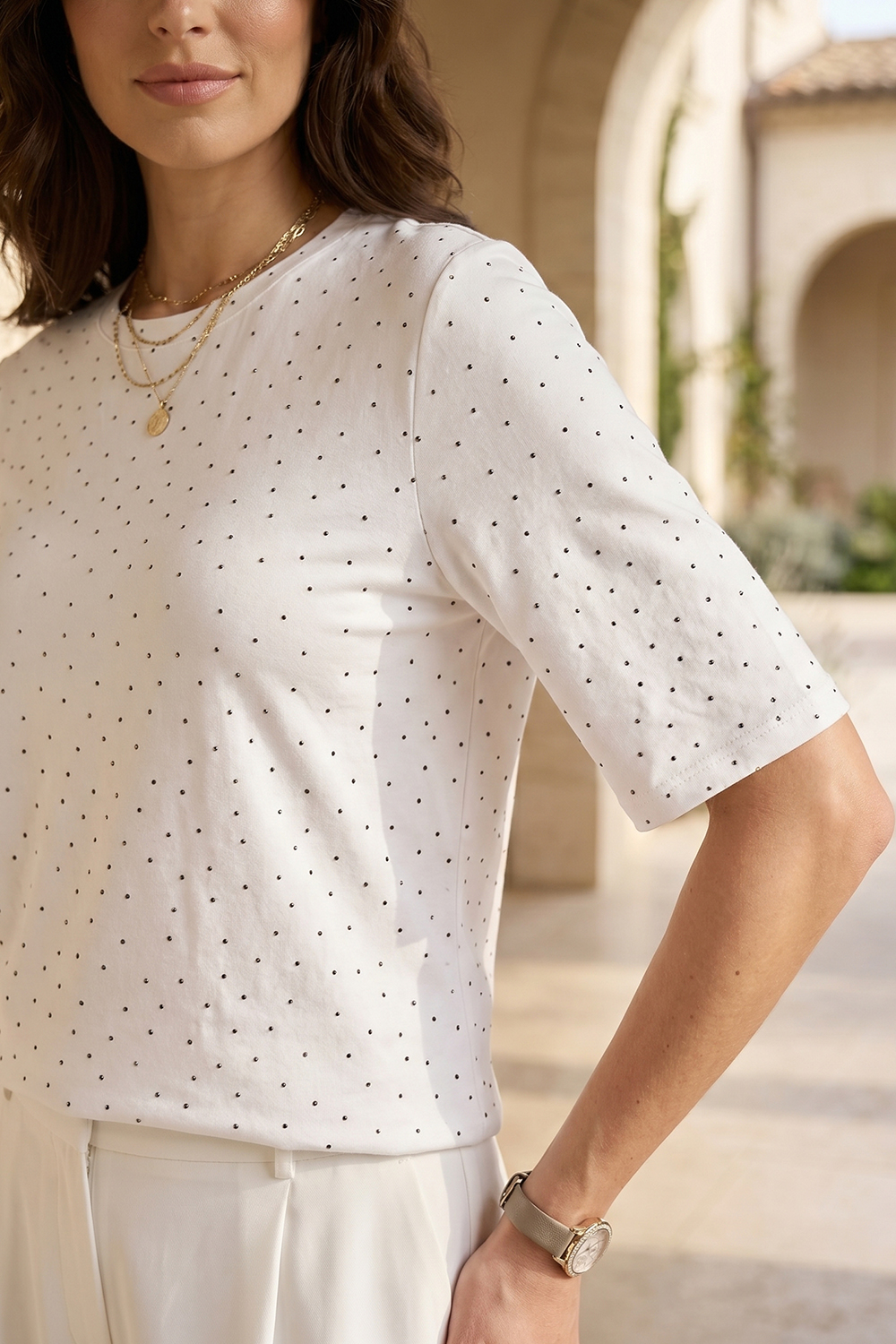 The Statement Top: How Unexpected Details Elevate Your Everyday Style
A practical editorial guide to wearing t-shirts, tops, bodysuit, longsleeves with more balance and repeatability.
The Statement Top: How Unexpected Details Elevate Your Everyday Style
A practical editorial guide to wearing t-shirts, tops, bodysuit, longsleeves with more balance and repeatability.
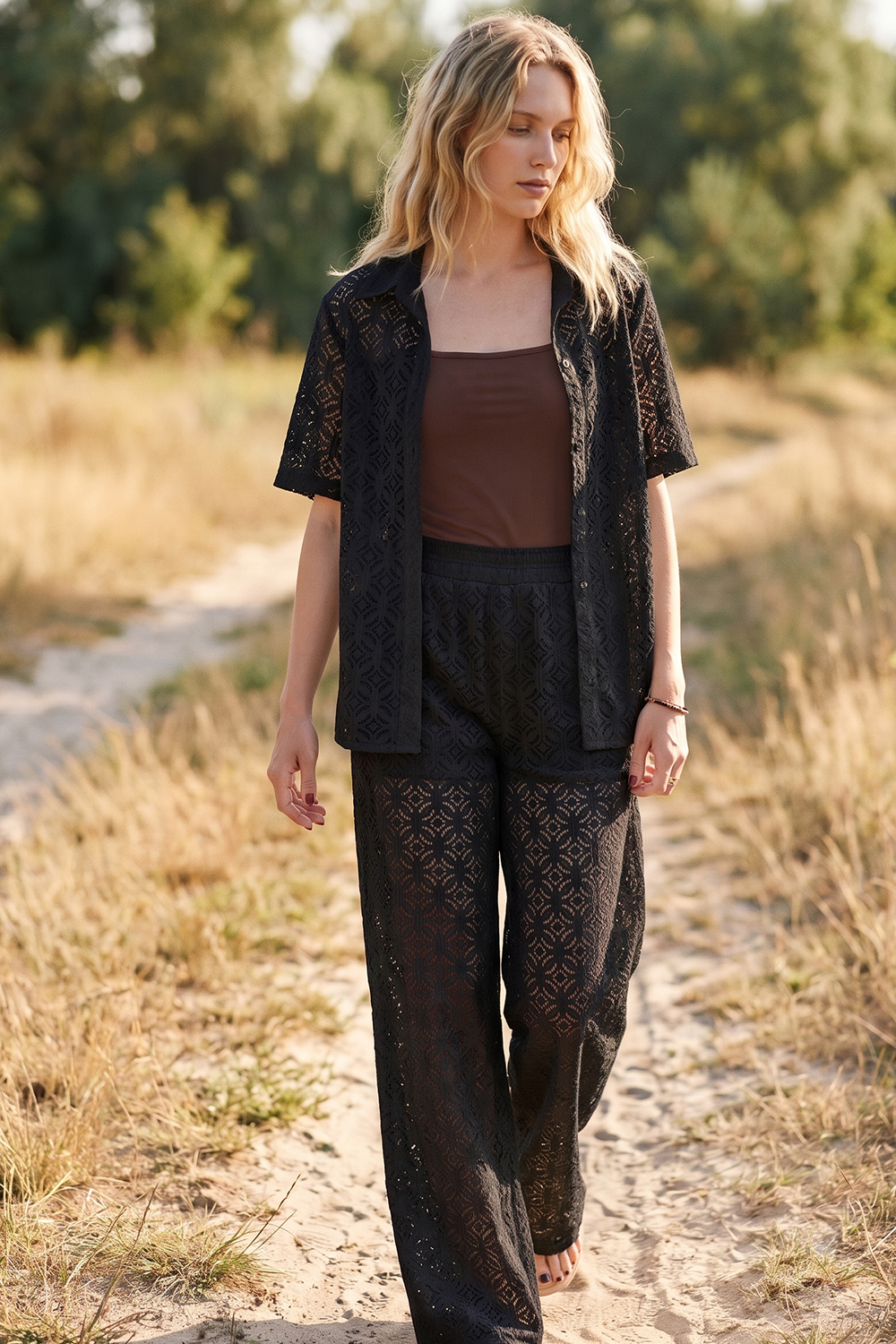 Sportswear's Urban Takeover: Elevating Everyday Style
A practical editorial guide to wearing sportswear with more balance and repeatability.
Sportswear's Urban Takeover: Elevating Everyday Style
A practical editorial guide to wearing sportswear with more balance and repeatability.
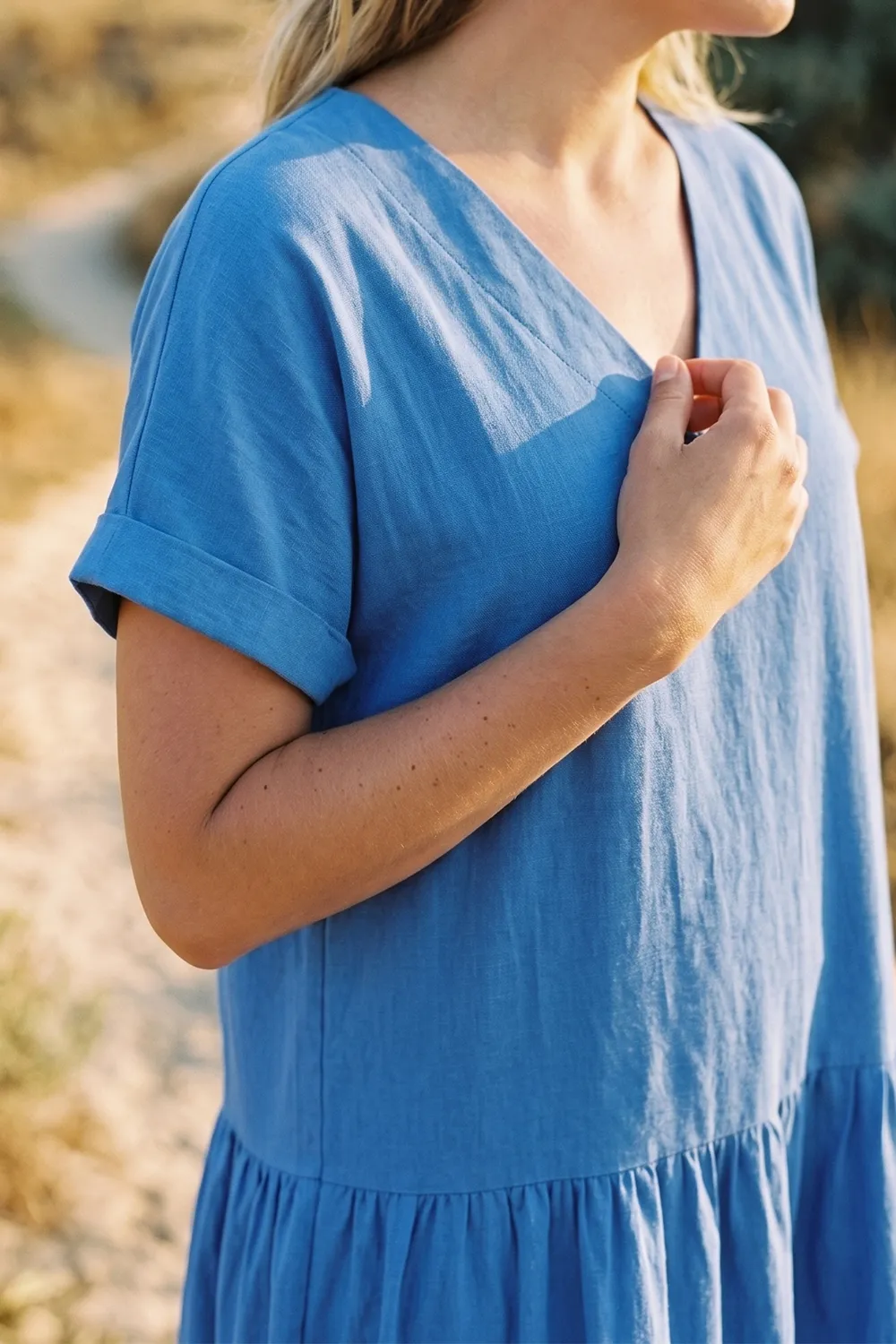 Achieving the Perfect Fit: A Guide to Dress and Jumpsuit Lengths
A practical editorial guide to wearing dresses and jumpsuits with more balance and repeatability.
Achieving the Perfect Fit: A Guide to Dress and Jumpsuit Lengths
A practical editorial guide to wearing dresses and jumpsuits with more balance and repeatability.