
 Free delivery in Ukraine upon full payment of the order
  Return of goods within 14 days

A home suit in which it's not shameful to meet a courier: trends 2025
Remember that awkward feeling when the doorbell rings, and you're in a stretched-out T-shirt and old pajama bottoms? A courier with a long-awaited package or a neighbor who suddenly dropped by catches you off guard. This situation is familiar to many, especially with the transition to remote work, when the boundaries between home and office, rest and business have become almost invisible. The era when home clothes were synonymous with «old things that are a shame to throw away» is irrevocably passing. Today, we talk about a home wardrobe as a well-thought-out part of our style and, more importantly, our comfort, self-respect, and even productivity.Dresses, jumpsuits
The modern rhythm of life demands multitasking from us, and our clothes must match it. We want to feel cozy lying with a book on the sofa, and at the same time be ready in a second to connect to a video conference or receive guests. That is why the concept of a «home suit» is undergoing a real revolution. It is no longer just a set of a sweatshirt and joggers. It is clothing that provides freedom of movement, is made from pleasant-to-the-body fabrics, and at the same time looks elegant enough to feel confident in any everyday situation. This is a conscious choice in favor of self-care, which begins with what we put on in the morning.
Why an old T-shirt is no longer an option? The evolution of home clothing
For a long time, home clothing performed a purely utilitarian function. People changed into it after work to «shed» the official dress code and relax. No one thought about its appearance. But with the growing popularity of freelancing and hybrid work schedules, our home has turned into an office, a gym, a place for meeting friends, and a relaxation zone all at once. And what we wear began to influence our mood and productivity much more strongly.
Psychologists call this phenomenon «enclothed cognition» or «conscious dressing.» The essence is that the clothes we wear send signals to our brain and influence our behavior and thinking. By wearing something shapeless and worn out, we subconsciously tune ourselves to a passive, relaxed mood, from which it can be difficult to switch to work mode. Conversely, neat, beautiful, and comfortable home clothes help to gather thoughts, structure the day, and feel more energetic and confident. This is not about walking around the apartment in a strict suit, but about finding a balance between absolute comfort and aesthetics that pleases the eye and boosts self-esteem. In an era when our home life is often displayed on social media, an aesthetic home look has become part of a personal brand.
What makes home clothes «presentable»? Key criteria
When you start looking for where tobuy a women's home suit, it's important to understand what to pay attention to. Presentability is not about complex cuts or expensive decorations. It's about the harmony of four components: material, silhouette, color, and details.Jumpsuits
The right choice helps create an image that will be appropriate for morning coffee on the balcony and for an unplanned video call. Here's an extended checklist to help you navigate:
- Material:This is the foundation of foundations. Give preference to natural, breathable fabrics. Cotton (especially long-staple Pima or Egyptian), staple, muslin, linen, and its blended variations — they are hypoallergenic, pleasant to the body, and allow the skin to breathe. Pay attention to modern eco-friendly materials such as modal or Tencel (lyocell) — they are incredibly soft, silky, and drape beautifully. For the cool season, quality knitwear, cashmere, merino wool are ideal. The main rule is that the fabric should be tactilely pleasant specifically to you.
- Cut and silhouette:Look for loose, non-restrictive silhouettes that still have shape. Instead of tight leggings and shapeless hoodies, choose palazzo pants, culottes, or straight knit trousers. Instead of an old T-shirt — a long-sleeve top with a beautiful neckline, a Henley top, or a loose tunic. Straight cut, A-line, light oversized — all this ensures comfort. It is important that the item has structure: a clear shoulder line, a neatly finished neckline, the correct length. This distinguishes a well-thought-out item from a baggy one.
- Details:The devil, as is known, is in the details. Small accents can completely transform a simple item. These can be interesting sleeves (for example, puffed or cuffed), delicate gathering, a small ruffle, a contrasting piping, like on classic pajamas, or an unusual neckline. Even quality mother-of-pearl buttons on a shirt dress or neat embroidery in tone can elevate an item to a new level.
- Color:Choose shades that suit you and lift your mood. Calm pastel and natural tones (sage, dusty rose, beige, camel, grey-blue) soothe and create a sense of coziness. Deep and rich colors (wine, emerald, indigo) help to concentrate and energize. Monochrome looks in one color scheme always look expensive and elegant — this is a simple way to create a chic home look.
Beyond the usual: when a dress is the best home suit
In search of ideal loungewear, we often get fixated on traditional two-piece sets. But what if we look at the problem more broadly? For many women, a dress becomes the ideal solution for home, surpassing anywomen's suits. Why does this happen? Firstly, it's absolute freedom. The absence of elastic at the waist or hips is a completely different level of comfort, especially if you spend a lot of time sitting for work or simply want to relax as much as possible. The body is not constricted, nothing presses or restricts.
Secondly, it's simplicity and elegance in one. A dress is a self-sufficient outfit. You don't need to match a top to a bottom; you simply put on one item and already look put-together and feminine. This saves time and mental energy in the morning. Modern dresses for home and leisure are sewn from the same comfortable materials as suits — cotton, viscose, modal, knitwear. Shirt dresses, loose A-line dresses, cozy sweater dresses, and flowing caftans are popular. This is an ideal compromise between pajamas and everyday clothes, which allows you to feel beautiful and well-groomed even within four walls.
Example №1: Freedom and comfort in a dress made of natural fabric
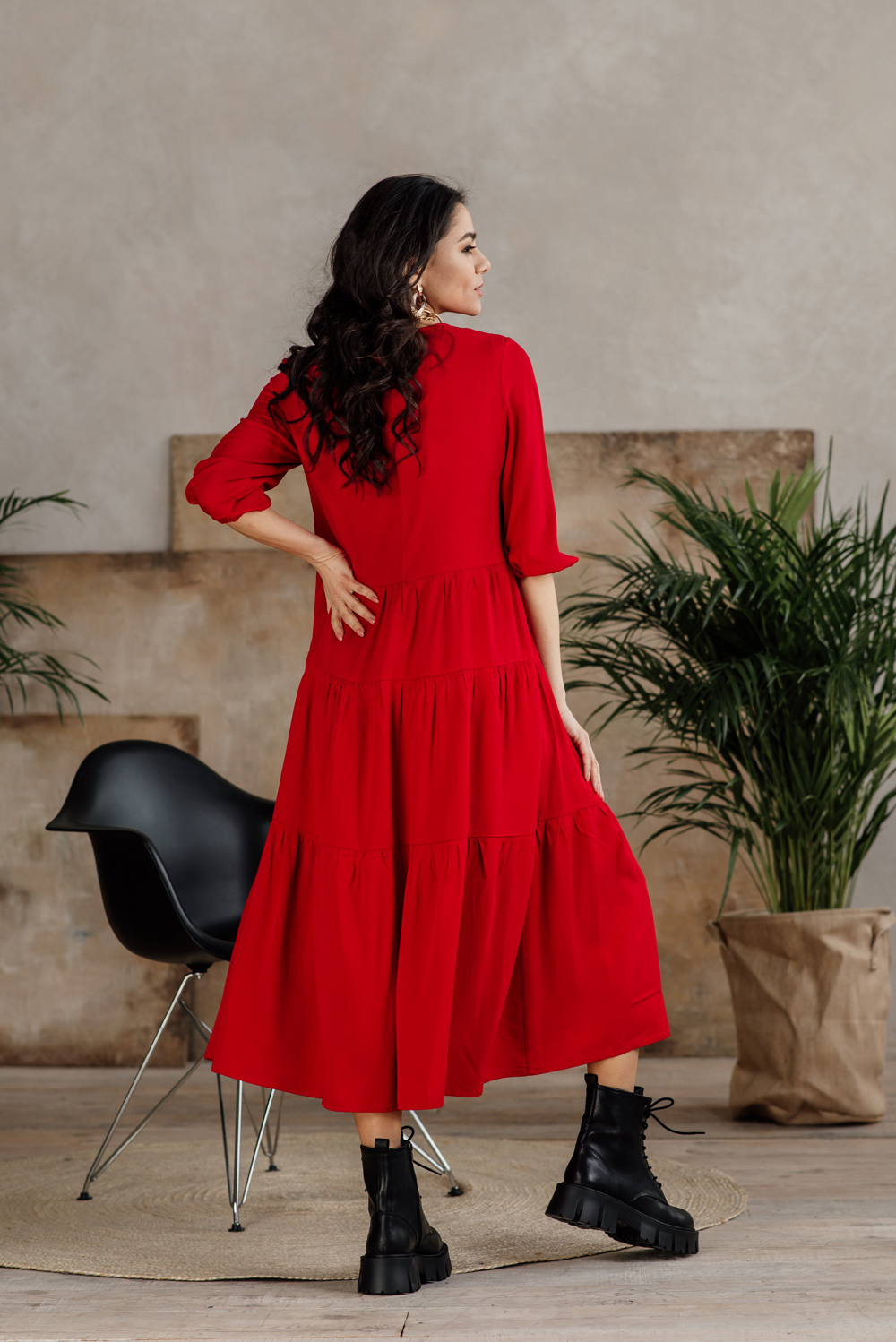
Imagine a loose-fitting dress made of 100% cotton (staple fabric). It doesn't cling to the body, doesn't restrict movement, and allows the skin to breathe. This is an ideal option for warm weather or a well-heated apartment. For example,Red midi dress with rufflesmade of staple fabric is an excellent example of this approach. The loose fit and pleasant-to-the-body cotton fabric provide maximum comfort, while details in the form of ruffles and ¾ sleeves with elastic make it interesting and neat.Sportswear
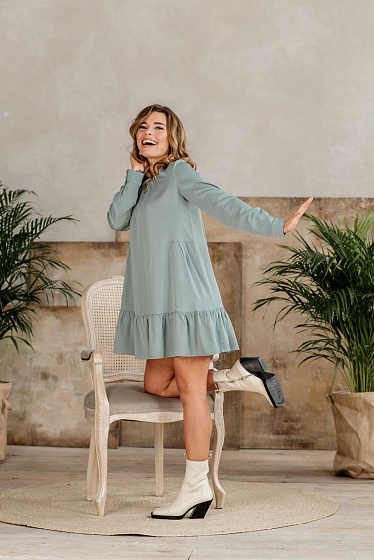
A similar effect is created by theBlue spring dress. Its loose fit with a ruffle at the bottom and gathering at the sides does not restrict movement, and the clean grey-blue shade looks fresh and calm. In such clothes, it's pleasant to do household chores, relax, and not be ashamed to open the door to a courier. This is precisely the case when comfort and aesthetics go hand in hand.
Warm solutions for cool evenings
When it comes towarm suits, we usually imagine fleece or thick knitwear. But what if you like the lightness of a dress, but want coziness and warmth? The solution is in layering, which is one of the main trends not only in street fashion but also in loungewear. Your favorite cotton home dress can easily become the base for a warm and stylish look. Just throw on a voluminous knitted cardigan, put on thick leggings or knee-highs, and you'll get a cozy and comfortable outfit for a cool evening in a "hygge" style.
This approach is much more practical than having separate sets for each season. You can adjust the degree of "warmth" depending on the room temperature. A soft cashmere sweater over a midi dress, a cozy robe-cardigan draped over the shoulders, or even a thin turtleneck worn under a dress — and you have a warm home ensemble that looks thoughtful and stylish. This allows you to use your favorite items all year round, adapting them to different conditions and creating new interesting combinations.
How to choose your ideal home wardrobe: practical tips
Choosing home clothes is a very individual matter. What is ideal for one person may be uncomfortable for another. Therefore, beforebuying home suits, think about your lifestyle. Create a small home capsule that will meet your needs.In Ukrainian
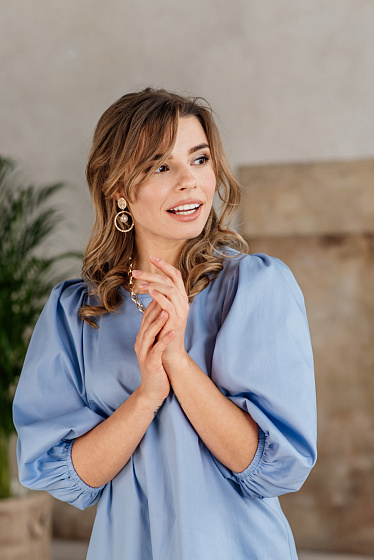
- For those working from home:If you often participate in video calls, models with an emphasis on the upper part will suit you. For example,Cotton dress with puff sleeves. Only the impressive voluminous sleeves and a neat collar will be visible in the frame, and no one will guess that you are sitting in a super-comfortable A-line dress. Blouses and tops made of silky viscose or modal combined with comfortable knitted trousers are also good.
- For young mothers:If you are constantly on the move, your priority is freedom, practicality, and ease of care. Midi length, a non-staining color, and natural fabric that is easy to wash and does not require complex ironing will be your best friends. Button-down shirt dresses are also convenient for feeding.
- For rest and relaxation:If home for you is primarily a place for relaxation, choose the most tactilely pleasant fabrics (cashmere, modal, soft cotton) and calm, soothing colors. Loose caftans, kimonos, soft knitted sets will help create a spa resort atmosphere at home.
The main rule is that home clothes should make you happy and give you a feeling of comfort and confidence. This is your personal uniform for restoring strength.
Frequently asked questions
We have collected answers to several popular questions that will help you navigate the world of modern home clothing.
How to care for home clothes made of natural fabrics so that they last longer?
Proper care is the key to longevity. For cotton, linen, viscose, and modal, choose a delicate wash cycle at a temperature not exceeding 30-40°C. Use mild liquid detergents instead of powders and avoid aggressive bleaches. To prevent items from deforming, spin them at low speeds and dry them flat, away from direct sunlight and heating appliances. It is best to iron such fabrics from the inside out while they are still slightly damp.
What is the difference between home wear and sleepwear?
The main difference is in functionality and cut. Sleepwear (pajamas, nightgowns) is designed for maximum comfort in a horizontal position: it is maximally loose, often has a more intimate design, and is sewn from the lightest fabrics. Homewear (loungewear) is a transitional category between sleep and going out. It is more structured, has a presentable appearance, and is intended for comfortable waking hours: work, household chores, receiving guests. You can, of course, sleep in it, but its main task is to provide comfort and confidence throughout the day.SALE
What other trends in homewear are relevant in 2025?
Besides dresses and quality materials, several trends remain relevant. Firstly, these are textured fabrics: ribbed knit, waffle fabric, crinkled muslin. They add depth and interest to the look. Secondly, the “quiet luxury” style: minimalist cut, fabrics expensive to the touch, absence of logos and flashy details, emphasis on quality and durability. Thirdly, three-piece sets are popular, consisting of trousers, a top, and a cardigan or shirt in a unified style and color. This is a ready-made layered solution for all occasions.
Is it worth spending money on expensive homewear?
Definitely, yes. This should be viewed not as an expense, but as an investment in your own comfort and emotional state. Firstly, quality items last much longer, not losing their shape and color after washes, which is more cost-effective in the long run (the cost-per-wear principle). Secondly, it is a daily manifestation of self-care. By wearing something beautiful and pleasant to the body, you boost your self-esteem and set the right mood for the entire day. It is just as important a ritual as a morning cup of coffee or your favorite face cream.
How to incorporate homewear into the concept of a capsule wardrobe?
Very simple! The principle is the same as with regular clothes. Choose 5-7 versatile, well-matching items in a single color palette. For example, the foundation of the capsule can consist of: 1) straight knit trousers in a neutral color (grey, beige), 2) a quality basic t-shirt, 3) a cozy long-sleeve top, 4) a versatile shirt-dress, 5) an oversized cardigan that can be thrown over everything else. By complementing this base with one or two accent pieces (for example, a bright caftan dress), you will get many combinations for any mood and situation, without cluttering your wardrobe.