
 Free delivery in Ukraine upon full payment of the order
  Return of goods within 14 days

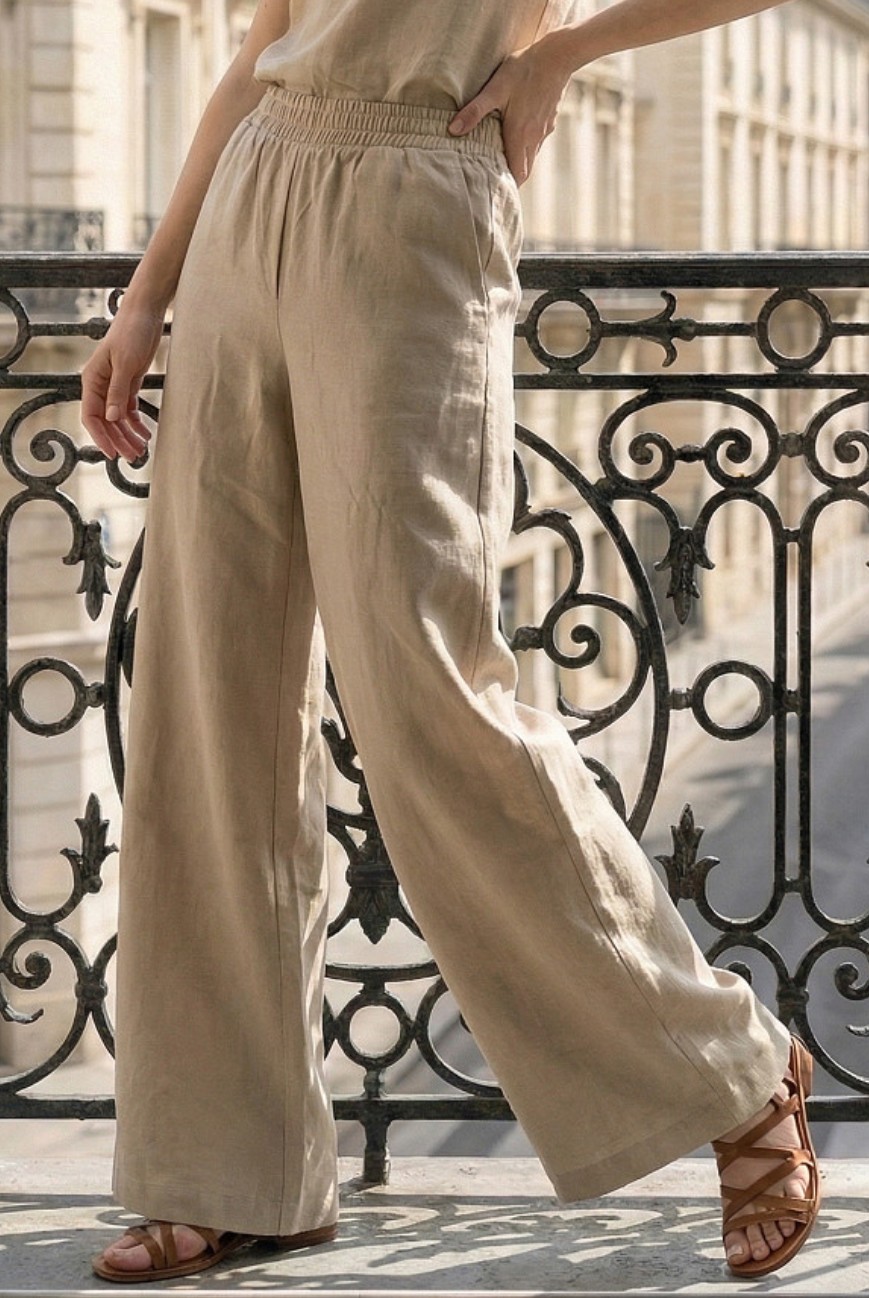
How to choose trousers by figure type: a guide to styles for the perfect silhouette
Finding the perfect trousers often resembles a complex quest. The same model can fit completely differently on different women, and the matter here is not in sizes, but in the features of the cut and its correspondence to body proportions. Instead of adapting your figure to fleeting trends, it is much more effective to learn how to choose styles that work for you, highlighting your advantages and creating a harmonious silhouette. Properly chosen trousers give not only comfort, but also self-confidence, becoming the basis for many outfits — fr om business to casual. They are able to visually lengthen legs, make the waist thinner, and hips more elegant.Jackets, suits
This guide will help you understand the variety of styles and determine which ones will suit you best. We will talk about how to define your proportions, what cut details to pay attention to, and how fabric, color, and even rise height can radically change the perception of the figure. Our goal is to ensure that every new pair of trousers becomes a successful investment in your wardrobe, and not another disappointment gathering dust in the closet. After all, the secret is not to blindly follow fashion, but to understand the language of cut and use it to your advantage.
Fundamentals: why fit is more important than trends
Before delving into the details of styles, it's important to grasp one rule: an ideal fit is the foundation. Even the most fashionable and expensive trousers will look sloppy if they wrinkle in the crotch, gape at the hips, or create an unsightly crease under the buttocks. A correct fit is synonymous with comfort and elegance. It means that the trousers sit on the waist or hips exactly wh ere intended by the designer, do not dig in or sag, and the leg line runs smoothly, without distortions.
Pay attention to three key areas: waist, hips, and length.
- Waist fit.The waistband should comfortably hug the waist, without creating a “roll” above it and without leaving a huge gap at the back when you sit down. If a gap appears, it indicates that the cut does not account for the curve of your lower back. A high rise (at or slightly above the navel) visually lengthens the legs and emphasizes the waist. A mid-rise (slightly below the navel) is a versatile and comfortable option for most figures. A low rise (on the hips) can shorten the legs and is mainly suitable for those with a flat stomach and long legs.
- Hip fit.The fabric in this area should lie smoothly, without stretching and without forming horizontal folds in the crotch area (the so-called “smile”). This is a sure sign that the trousers are too small. On the other hand, excess fabric sagging at the front or back indicates that the model is too large for you or does not suit the cut. Pockets should lie flat and not gape.
- Length.This is a matter not only of aesthetics, but also of proportions. Incorrect length can visually “cut off” the legs and make the figure squat. Classic straight and wide trousers should reach the middle of the heel or almost touch the floor if you wear them with flat soles. Cropped models (7/8, culottes) should expose the narrowest part of the ankle so as not to “cut” the leg at its widest point.
Remember that feeling when trousers fit perfectly? It is this feeling of comfort and confidence that we strive for.
Defining your body type: the starting point
To understand how to choose women's trousers by figure type, it's worth starting by analyzing your proportions. Stylists often use a classification of body types, but these terms should not be taken as strict frameworks. The main goal is to understand where your main volume is located and how to create visual balance with clothing. Your task is not to fit yourself into a label, but to determine the ratio of shoulders, waist, and hips.Trousers
- «Pear» (Triangle):Hips are noticeably wider than shoulders, the waist is clearly defined. The task is to balance the lower part without adding volume to it, and to accentuate the top.
- Apple (Circle):The main volume is concentrated in the middle part of the body (abdomen, waist), while the legs are often slender. The task is to visually elongate the silhouette and create the illusion of a waist.
- Rectangle:Shoulders, waist, and hips are approximately the same width, body curves are weakly expressed. The task is to create curves and define the waist.
- Inverted Triangle:Shoulders are wider than hips. The task is to add volume to the lower part of the body to balance wide shoulders.
- Hourglass:Shoulders and hips are approximately equal in width, the waist is narrow and well-defined. The task is to emphasize harmonious proportions without disrupting them.
Understanding these simple principles will help you approach clothing choices consciously and not get lost in the fitting room.
Trousers for wide hips and a narrow waist (Pear type)
For a figure with a more voluminous lower part, the main task is to balance the silhouette, without adding extra volume to the hips and visually elongating the legs. The best helpers in this will be models that create a straight, continuous line from the hip to the very bottom. This helps to smooth the transition from a narrow waist to wide hips and makes the figure more harmonious.
Ideal styles:
- Straight trousers (Straight leg):A classic cut that gently outlines the hip and goes straight down, without narrowing or widening.
- Palazzo:Wide trousers made of flowing fabric, widening from the hip. They completely hide the contours of the legs, creating a flowing and elegant silhouette.
- Flared trousers (Bootcut/Flare):Models flared from the knee perfectly balance hip volume, creating a harmonious "hourglass" silhouette.
High or mid-rise is a must — it draws attention to the narrowest part of the body, the waist. Avoid patch pockets on the sides, active decor on the hips, low-rise, and overly thin, tight-fitting fabrics that might emphasize what you'd prefer to hide. Dark, matte fabrics are preferable to light and shiny ones.
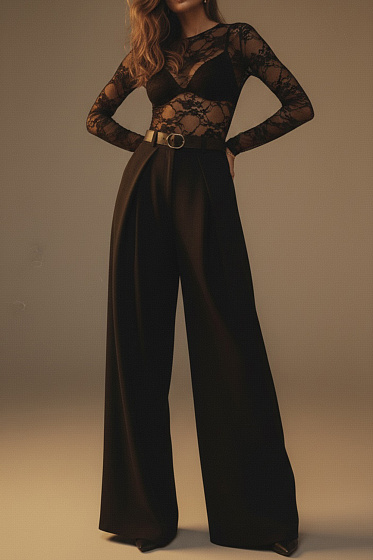
An excellent example isChocolate palazzo trousers with a belt and pockets. Their cut, widening from the hip, creates a flowing silhouette, and expressive pleats at the front form a vertical line that visually slims and lengthens the legs. This model conceals nuances of fit in the hip area, ensuring comfort and an elegant look.Blazers
How to choose trousers if the main volume is in the waist area (Apple body type)
If your main task is to visually narrow the mid-section of the body and create the illusion of a slimmer waist, you should pay attention to models that do not create extra volume in this area. Your choice is trousers with a concise cut in the upper part and straight or slightly tapered legs that will showcase slender legs.
Ideal styles:
- Straight trousers with a smooth front (Flat front):The absence of darts and pleats at the waist is a key point.
- Slightly tapered towards the bottom (Tapered):This cut helps shift the focus to elegant ankles.
- Trousers with an elastic waistband or side zipper:They create a smoother and neater silhouette in the abdominal area compared to models with a traditional front fastening.
Models with a medium or high rise, which will gently support the abdomen, will be an optimal solution. Dense, shape-retaining fabrics, such as quality suiting fabric, will help sculpt the figure. Avoid low-rise, which can unflatteringly emphasize the abdomen, as well as massive belts and straps.
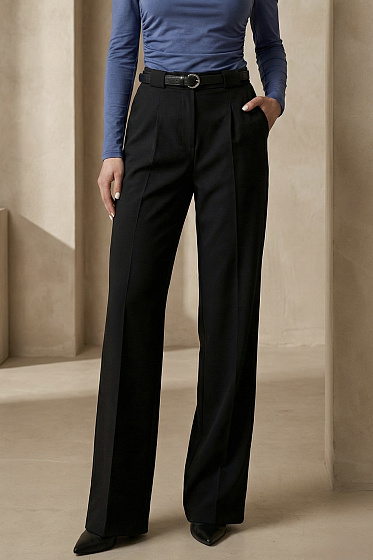
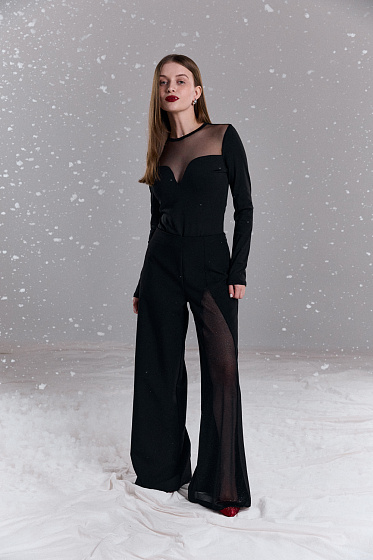
As a basic model, you can considerBlack straight-cut trousers. Their classic silhouette is not overloaded with details, and clear lines visually elongate the figure. The elegant side seam and absence of unnecessary elements at the front make the fit neat and help create a slimmer look.
Solutions for different height proportions
For petite women: visually lengthening legs
For petite women, well-chosen trousers can be a real salvation. The main goal is to create the longest possible vertical line to visually add a few centimeters of height. The main tool for this is a high rise. It shifts the visual waistline upwards, making the legs appear longer.Trousers
Successful options:
- Straight and slightly flared from the knee models:Length reaching mid-heel works flawlessly.
- Cropped trousers (culottes or 7/8):Wear them provided they reveal the narrowest part of the ankle, and pair with heeled or pointed-toe shoes.
- Monochrome looks:Trousers and a top in one color create a single vertical that elongates the silhouette.
Avoid overly wide and baggy models that can "eat up" height, as well as low-rise trousers and large prints.
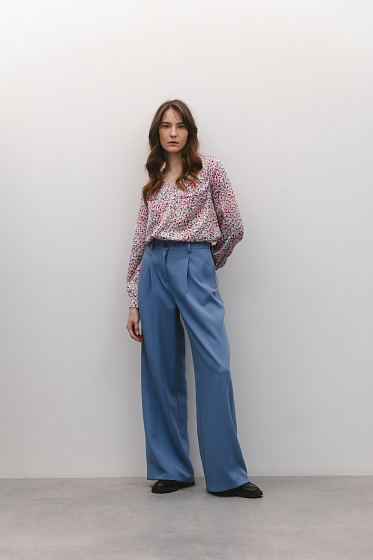
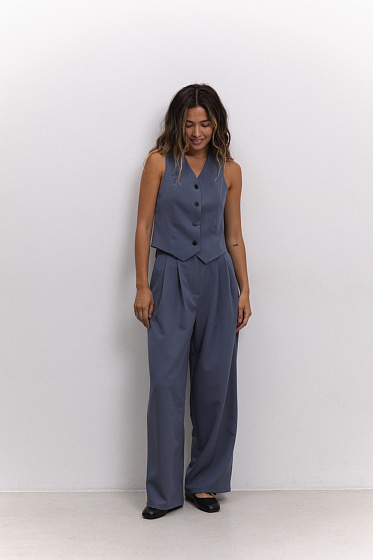
Even wide models, such asGrey-blue palazzo trousers, can suit petite girls if the rules are followed. A high waist and maximum floor-length combined with heels create a single color vertical that effectively elongates the silhouette. Elegant pleats also contribute to this effect.
{{azuri_product_block:auto_3}}For tall women: harmonizing the silhouette
Tall women can afford almost any style, but there are nuances here too. The main task is to maintain harmony of proportions. You can confidently wear both wide and tapered models. Culottes and cropped trousers, which might look risky on petite women, look great. Low and mid-rise are also appropriate. If you want to visually make your legs slightly less long, choose models with turn-ups (cuffs) or wear trousers with a contrasting colored belt.
Not just the style: the role of fabric and color
Choosing the style is half the battle. The fabric from which the trousers are sewn plays an equally important role in creating the ideal silhouette.Suits
- Structured fabrics:Dense cotton, wool, tweed, quality suiting fabric (for example, "Tiar Boston" or "Barbie Suiting") hold their shape well, help to hide minor imperfections, and create a clearer, more put-together silhouette. They are ideal for office and business looks.
- Flowing fabrics:Silk, viscose, lyocell, fine linen create soft, flowing lines and add femininity to the look. However, they can emphasize body contours, so they require careful selection of seamless underwear.
- Fabrics with elastane:A small percentage of stretch in the composition provides comfort and a better fit, but it is important that the fabric is dense enough and does not show through when stretched.
Color and print are also powerful correction tools. Dark solid shades (black, graphite, dark blue, chocolate) are traditionally considered the most versatile and slimming. However, one should not be afraid of light tones — with the right cut, they look no less advantageous. Vertical stripes are a classic and always effective technique for visually lengthening legs. Large and contrasting prints can add volume, so it is better to use them with caution if you are not aiming for such an effect.
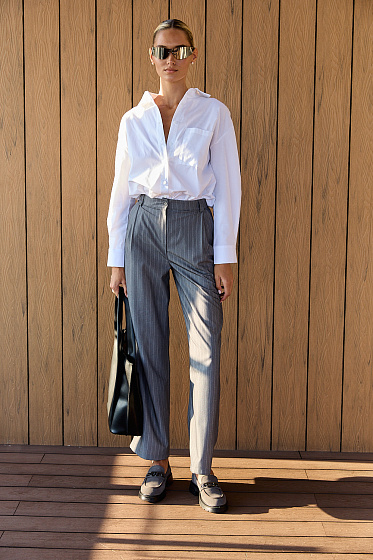
For example,graphite wide trouserswith a thin stripe combine two corrective elements at once: a wide cut that hides figure nuances, and a vertical print that elongates the silhouette.
Brief checklist before purchase
To avoid making a mistake with your choice, ask yourself a few simple questions before heading to the checkout or clicking the “buy” button:
- Proportion compliance:Does this style balance my figure? Does it emphasize what I want to emphasize and hide what I want to hide?
- Fit at the waist and hips:Where is the waistband of the trousers? Am I comfortable? Does the fabric lie smoothly, are there no creases or excessive tension?
- View from behind:How do the trousers fit from behind? Do the pockets flatten the buttocks? Are they in their place?
- Length:Is this length suitable for me? With what shoes from my wardrobe do I plan to wear these trousers?
- Comfort in movement:Can I freely sit, bend, walk? Do the trousers restrict movement?
- Versatility:Will I be able to create at least 3-4 different looks with these trousers from the items I already own?
Answers to these questions will help make the choice more conscious and avoid impulsive purchases. Ideal trousers are those in which you feel not only beautiful, but also absolutely comfortable throughout the day, whether it's a long meeting in the office or a walk around the city. This is your second skin, which gives confidence and the freedom to be yourself.