
 Free delivery in Ukraine upon full payment of the order
  Return of goods within 14 days

How to choose a women's cardigan: a guide to style, warmth, and layered looks
A cardigan is not just an extra layer of clothing for a cool day. It is one of the most versatile and underrated wardrobe items, capable of instantly changing the mood of an outfit, adding coziness, elegance, or effortless relaxation. Unlike sweaters and pullovers, it is easy to put on and take off, adapting to changeable weather and temperature fluctuations indoors and outdoors. A properly chosen women's cardigan becomes a true stylistic tool that helps create complex and thoughtful layered looks. But how among hundreds of models to find the one that will warm, adorn, and serve for more than one season? Let's delve into the details, from fabric composition to cut intricacies.Dresses, jumpsuits
Why is a cardigan an indispensable item in your wardrobe?
The secret to the cardigan's enduring popularity lies in its phenomenal versatility. It easily transitions from one stylistic plane to another, becoming a connecting link for a wide variety of items. In the morning, you throw on a bulky knitted cardigan over a t-shirt and jeans for a dog walk; during the day, it complements your strict office outfit with a blouse and pencil skirt; and in the evening, it can become an elegant finish to an ensemble with a cocktail dress. This adaptability makes it a key element for creating a capsule wardrobe. It unites other items, smooths out sharp contrasts, and adds completeness and softness to the look.
Recall the feeling when you wrap yourself in soft knitwear on a cool summer evening — it's not just about warmth, but also about a sense of security and psychological comfort. Furthermore, women's cardigans are a foundation for creativity in layering. They allow you to play with textures, lengths, and volumes, creating visually interesting and dynamic outfits. A smooth cashmere cardigan over a silk blouse, a bulky textured one with a thin cotton long-sleeve, a cropped one with a flowing floral dress. Each time, a new, fresh result is achieved. It is this variability that makes it truly indispensable in any season, from frosty winter to a cool August evening.
Choosing the material: from coziness to elegance
Material is the first thing to pay attention to when choosing. Not only thermal properties and tactile sensations depend on it, but also how the item will look, drape, and how long it will last. Each material has its own advantages and features.
- Wool (merino, alpaca, mohair).An ideal choice for those looking for a truly warm cardigan for the cold season. Wool perfectly retains heat, allows the skin to breathe, and absorbs moisture well, remaining dry to the touch. Models made ofmerino woolare especially valued for their fineness, softness, and lack of prickliness.Alpacaprovides a fluffier, silkier, and very warm pile, which is also hypoallergenic.Mohaircreates the effect of an airy, fluffy "cloud" and looks very cozy, but requires delicate care.
- Cashmere.It is a synonym for luxury, status, and unparalleled comfort. Incredibly soft, delicate, light, and yet several times warmer than regular wool. A quality cashmere cardigan is an investment in your wardrobe that, with proper care, will delight for years, becoming only softer over time. When choosing, pay attention to the density of the knit and the length of the fibers — good cashmere should not be too loose.
- Cotton.An excellent all-season option, especially for spring and summer. Cotton knitwear is pleasant to the body, hypoallergenic, breathable, and easy to care for. It doesn't provide as much warmth as wool but is ideal for creating light layered looks or for those sensitive to wool fibers. Thick cotton holds its shape well, while thin cotton drapes beautifully.
- Blended fabrics (with added acrylic, polyester, viscose, modal).Modern blended materials often combine the best qualities of natural and synthetic fibers. A small percentage ofacrylicorpolyestermakes an item more durable, helps it hold its shape, and prevents shrinkage.Viscoseormodal(an improved version of viscose) give the fabric softness, silkiness, and a beautiful sheen, improving its drape. The main thing is that the percentage of synthetics should not be dominant, otherwise the item may lose breathability and start to electrify.
The choice of material depends on your goals. For maximum warmth and comfort in winter, look for wool and cashmere. For demi-season and summer looks, as well as for offices with good heating, cotton or thin blended women's knitwear is more suitable.Midi
Cut and length are everything: choosing a cardigan for your style and figure
After material, the cut is a key factor determining how a cardigan will fit and what effect it will produce. Length and volume directly affect body proportions and the overall silhouette. There is no universal cut for everyone, but there are a few basic principles that will help you make the right choice.
Long cardigans(mid-thigh and below) visually elongate the silhouette, creating a slimming vertical line. They perfectly mask the hip area and pair well with slim trousers, skinny jeans, leggings, and sheath dresses. Straight-cut models without fasteners create a relaxed and elegant look.
Cropped models, ending at the waistline or slightly above, draw attention to it. They are ideal for dresses with full skirts, high-waisted trousers, and skirts, as they do not disrupt proportions and emphasize the narrowest part of the torso. This is an excellent choice for creating retro-style looks or for petite women.
Oversized cardigans— are the embodiment of modern relaxed style and comfort. They are best combined with a form-fitting "bottom" (skinny jeans, leggings, slip dress) to balance volumes and not overload the look. It is important that a silhouette is discernible under a voluminous cardigan, otherwise there is a risk of looking shapeless.Jumpsuits
Checklist: How to choose a cardigan cut?
- To create an elongated silhouette:long, straight-cut models without unnecessary details and active decor.
- To emphasize the waist:cropped models, cardigans with a belt, or thin models that can be tucked into trousers or a skirt.
- For a relaxed casual look:voluminous oversized cardigans with a chunky knit and dropped shoulder line.
- For a business style:cardigan-jackets made of dense knitwear that hold their shape well, or classic mid-length button-up models made of fine wool or cashmere.
The art of layering: what to combine a cardigan with?
A cardigan is the ideal "third layer" that completes an outfit and makes it more interesting. But how to properly integrate it into different styles? One of the most effective techniques is combining different textures and styles. For example, a cozy, perhaps even slightly rough knitted cardigan can be draped over a light and elegant satin or silk dress. This creates an interesting contrast and makes the look more complex and thoughtful.
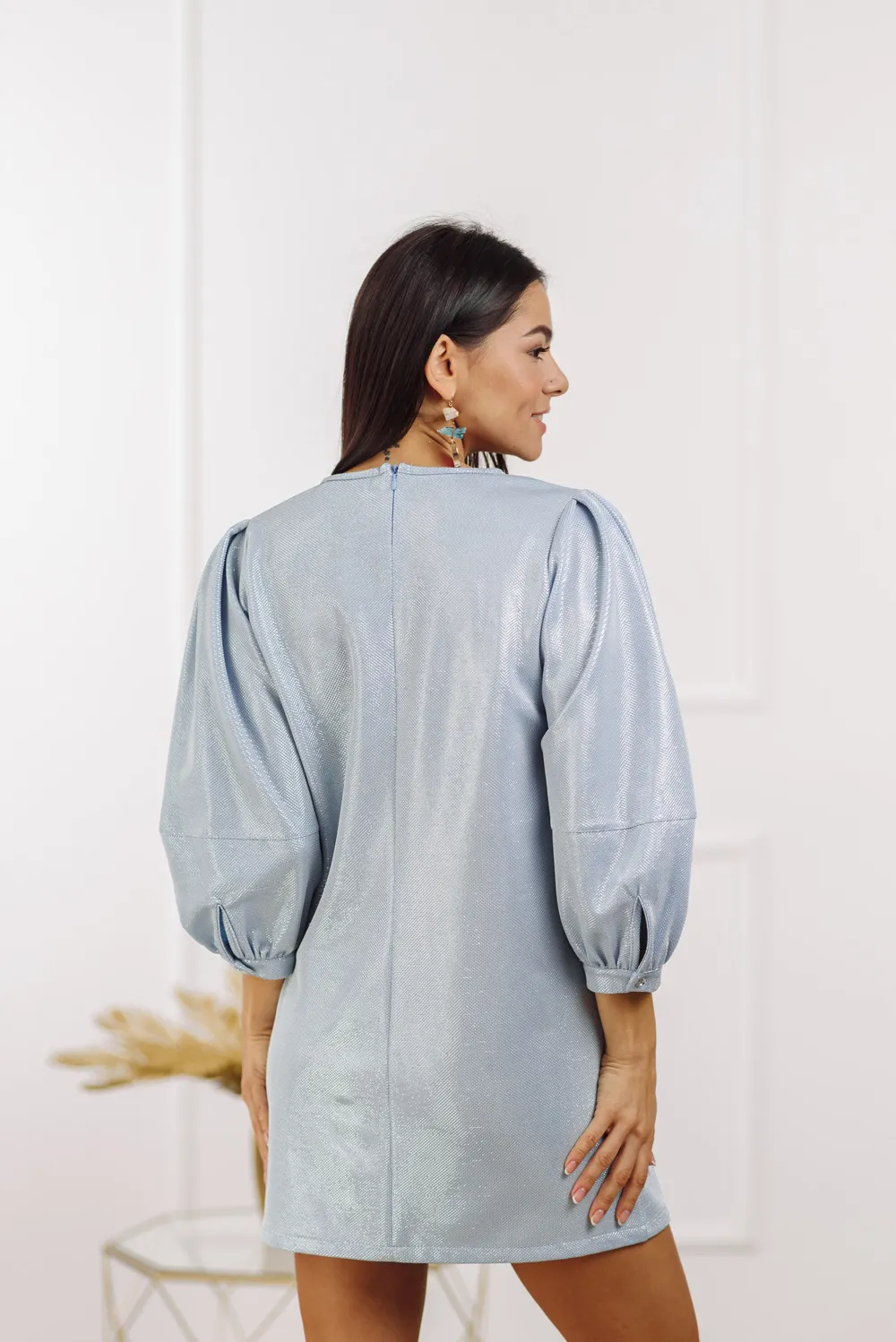
Imagine the situation: you've been invited to a cocktail party, but the weather doesn't allow you to come in just a dress. A simple and elegant cardigan in a neutral color will not only keep you warm but also add restraint to the look. It can be an excellent backdrop for a striking item, such asShiny blue mini dress. The soft knit of the cardigan will balance the shine of the metallic fabric, making the outfit appropriate even for a less formal event. This is an excellent way to adapt a festive item for different occasions.
The same principle works with other textures. Combining a smooth, thin cardigan with the textured fabric of a dress creates a deep and multifaceted look. For example, for the modelShiny textured dressmade of lurex knitwear, you can choose a cashmere or viscose cardigan in a matching or contrasting shade. The smooth surface of the cardigan will highlight the interesting texture of the dress without overpowering it. This technique allows you to wear even the boldest and brightest items, fitting them into a calmer and more elegant context.
Color Palette and Prints: Creating Harmonious Combinations
The color of a cardigan plays no less important role than its cut. Basic neutral shades — beige, camel, grey melange, black, dark blue, cream — are the most reliable investment. Such a stylish cardigan will easily fit into any wardrobe and will combine with almost all items. It will become that very “lifesaver” when you need to quickly put together a harmonious and complete look.Midi
On the other hand, a bright cardigan can become the main accent in an outfit and a powerful tool for self-expression. A model in rich emerald, berry, cobalt, or sunny yellow can liven up the simplest set of jeans and a white T-shirt. I recently saw a girl in a cafe wearing a simple grey suit, but a bright orange cardigan was draped over it — this detail instantly made the whole look memorable and lifted the mood. When choosing a bright model, it is important that the other elements of the outfit are more subdued, serving as a background for it. If you are not afraid of experiments, try combining a printed cardigan (for example, in classic Breton stripes, argyle check, or with an animalistic pattern) with plain items whose color echoes one of the print's shades.
Knitwear Care: How to Preserve Your Favorite Cardigan for a Long Time?
To ensure your warm cardigan delights you for as long as possible, maintaining its original appearance, it's important to care for it properly. Knitwear is a delicate material and requires a special approach.
- Check the label.This is the first and main rule. Always follow the manufacturer's care recommendations.
- Proper washing.The general rule for wool, cashmere, and many blended fabrics is hand washing or delicate machine washing in a special laundry bag. Use cool water (not above 30°C) and special liquid detergents for wool and silk that do not contain aggressive enzymes.
- Gentle wringing.After washing, knitwear items should not be twisted or heavily machine-wrung. Gently squeeze out excess water by wrapping the item in a terry towel, then proceed to drying.
- Horizontal drying.Dry cardigans only in a horizontal position on a flat surface, away from direct sunlight and heating appliances. Place a dry towel under the item. Drying on a hanger under the weight of water can lead to irreversible stretching and deformation.
- Proper storage.It is also better to store cardigans folded on a shelf, rather than on hangers. This will help avoid stretching in the shoulder area. To protect against moths, use lavender sachets or cedar balls.
- Dealing with pilling.The appearance of pills (pilling) is a natural process for many natural fibers. They can be carefully removed using a special fabric shaver or a knitwear comb. Do not try to pull them off by hand, as this can damage the fibers.
These simple rules will help avoid shrinkage, stretching, and loss of shape, and your favorite item will look like new for several seasons in a row, providing you with warmth and comfort.