
 Free delivery in Ukraine upon full payment of the order
  Return of goods within 14 days

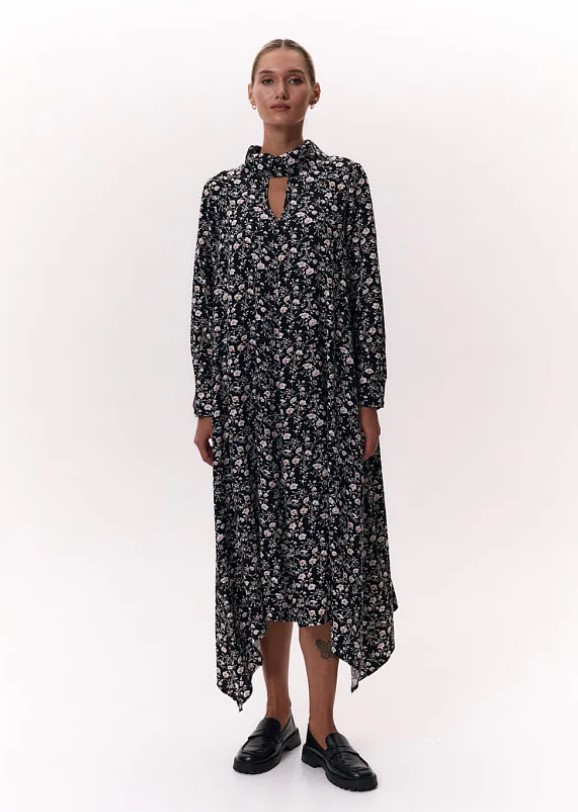
Oversize Dress: How to Wear the Main Trend of 2026 and Not Get Lost in Volume
Oversize style is not just a fashion for baggy clothes. It's a whole philosophy of comfort, freedom, and self-confidence that has firmly established itself in wardrobes and is not going to give up its positions. The oversize dress has become a true uniform for those who value practicality but are not willing to sacrifice style. It symbolizes a rejection of restrictive frameworks and celebrates naturalness. However, the main question that concerns many is: how to wear voluminous items and not turn the silhouette into a shapeless something? It seems like an art accessible only to stylists and models, but in reality, everything is much simpler. The main thing is to understand the principles of working with volume, proportions, and textures.Dresses, Jumpsuits
Remember that feeling when, after a long day at the office, you finally take off your strict suit and change into something loose and comfortable. Oversize gives you this feeling of lightness throughout the day, while allowing you to look relevant and put-together. This trend has deep historical roots: fr om the free silhouettes of the 1920s, which freed women from corsets, to the voluminous “power suits” of the 1980s, symbolizing strength and independence. Today's oversize is the quintessence of these ideas, adapted to the modern pace of life. In this guide, we will analyze how to choose that perfect oversize dress, what to combine it with, and how to adapt this trend to your body type and lifestyle, avoiding common mistakes. We will talk about fabrics, cuts, and little tricks that will help you make friends with volume once and for all.
What is “oversize” really? Understanding the terms
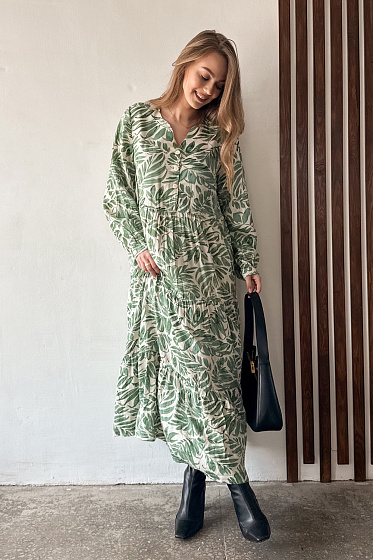
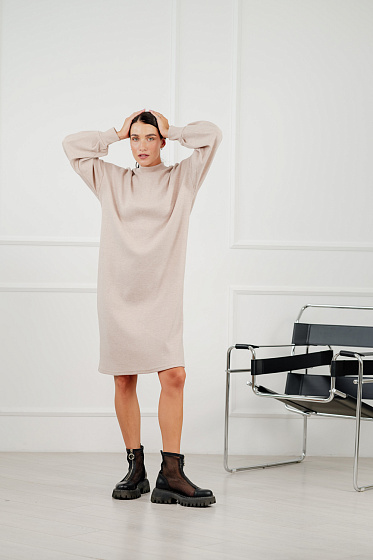
The first and most important rule to learn: oversize is not just an item a few sizes larger. Buying a regular dress in size XL instead of your M will not give the desired effect. Most likely, it will fit poorly in the shoulders, which will “drop” not wh ere the designer intended, the sleeves will be too long, and the darts and other structural elements will be completely out of place. This will create a sloppy, not stylish, look.
True oversize is a cut that was specifically designed to look voluminous and loose, yet fit the figure correctly. Designers intentionally increase some details (width, sleeve length, overall volume) but leave others standard (for example, the neckline, shoulder line, or cuffs) so that the item retains its structure and “sits” correctly. It is these thoughtful details that distinguish designer oversize from simply large clothing.
Key Silhouettes of Oversize Dresses
There are several key silhouettes that will help you navigate the world of voluminous dresses. Each of them works with the figure in its own way and creates a different mood.Jumpsuits
- Shirt dress.Perhaps the most versatile and popular option. It can be worn as a standalone item, loosely or by accentuating the waist with a belt. Or it can be used as an outer layer, thrown over a top and jeans or trousers.
- Trapeze dress (A-line).This style, which became popular in the 60s, widens from the shoulder or bust line, creating a flowing and light look. It perfectly masks the waist and hip area, emphasizing the legs.
- Cocoon dress.A recognizable silhouette that has maximum volume around the waist and hips and tapers towards the bottom. It forms a soft and cozy oval that looks very modern and conceptual.
- Sweater dress.An ideal choice for the cold season. A voluminous knitted dress provides incredible comfort. It can be chunky knit, creating a cozy textured look, or made of fine cashmere for a more elegant appearance.
- T-shirt dress.An elongated version of a loose T-shirt is a must-have for a summer casual wardrobe. It looks great with sneakers, trainers, or chunky sandals.
Key to success: how to choose the right fabric and cut
The material from which the dress is sewn plays a decisive role in how it will look and feel. The choice of fabric directly affects the silhouette, its structure, and the overall impression of the look.
Structured and dense fabrics
Dense, shape-retaining fabrics, such as denim, thick cotton, corduroy, tweed, or even neoprene, create a more graphic, structured silhouette. Suchwomen's dresswill clearly outline the shape defined by the cut and will not cling too tightly to the body when moving. This is an excellent choice for creating minimalist, architectural, and strict looks. For example, a corduroy shirt dress will be a great base for an autumn wardrobe, and an A-line dress made of thick cotton will look excellent in a business context.
Soft and flowing fabrics
On the other hand, soft and flowing fabrics — viscose, silk, staple, modal, thin knitwear — create a completely different mood. They drape softly, delicately following the curves of the body in motion, and make a voluminous silhouette more feminine and refined. Such dresses do not add unnecessary visual volume, but rather envelop the figure, creating a feeling of lightness and dynamism. A loose-fitting model made of staple or silk, such as, for example,Silk mini dress with long sleeves, — a perfect example of how fabric shapes the character of an item. It doesn't weigh down the look, but rather adds elegance and airiness to it.
The importance of cut details
Pay attention to details that help «assemble» the look. A clear shoulder line, expressive cuffs on the sleeves, a neat collar, an asymmetrical hem, or vertical seams — all this prevents the dress from turning into a shapeless sack. These elements serve as a kind of framework that structures the silhouette, making it more interesting and thought-out. Even in the most voluminous dress, there should be points that «hold» it on the figure and create correct proportions.Sportswear
Playing with proportions: how to style oversized
The main secret to a successful oversized dress look is balance and playing with contrasts. A voluminous item needs to be balanced with something more elegant, structured, or form-fitting. Here are a few proven techniques.
Reveal elegant body parts
The simplest way to make the silhouette lighter is to show off the thinnest parts of the body: wrists, ankles, collarbones, and neck. Roll up sleeves to ¾ length, choose a midi or mini length that reveals the legs, or emphasize a V-neckline. These simple techniques instantly «lighten» the figure and make the look more refined.
Use a belt
A belt is your best friend when working with volume. It allows you to instantly create an accent on the waist, change the proportions of the dress, and make the silhouette more feminine. Experiment with different options: it can be a thin leather strap for a subtle hint at the waist, a wide corset belt for a dramatic effect, or a fabric belt matching the dress for a monochrome look. Some models, likeBlack and white loose shirt dress with a belt, already come with a belt, which gives you the freedom to choose: wear it for a more put-together look or remove it for maximum relaxation.
The Right Footwear and Accessories
Footwear plays a key role in completing the look. To «ground» a voluminous top and create a harmonious contrast, choose chunky footwear: rough boots with a tractor sole, «ugly sneakers,» or sandals with wide straps. Conversely, if you want to add sophistication and fragility to the look, combine an oversized dress with elegant high-heeled sandals, classic pumps, or ballet flats. The bag is also important: to avoid exacerbating shapelessness, choose accessories with clear geometry — structured totes, satchel bags, or rigid cross-body bags.In Ukrainian
Layering is your trump card
An oversized dress is an ideal base for creating complex layered looks. In cold weather, you can wear a thin turtleneck or long-sleeve top underneath — this will not only keep you warm but also add a color accent. Over the dress, you can throw on a cropped jacket, a vest, or a long cardigan. The main rule of layering: if one layer is voluminous, the others should be more restrained so as not to overload the silhouette.
Oversized for Different Occasions: From Office to Party
Many mistakenly believe that an oversized dress is only suitable for informal outings, but this is a misconception. A correctly chosen model and proper styling will make it appropriate for almost any situation.
- For the office.For a business environment, choose shirt dresses or A-line models made of dense suiting fabric, cotton, or viscose in restrained, neutral colors (black, gray, beige, dark blue). Complete the look with a strict fitted jacket to balance the volume, loafers or ankle boots with a stable heel, and a laconic bag.
- For everyday.For everyday outings and meetings with friends, models made of cotton, linen, or knitwear are suitable. Here you can boldly experiment with color and prints. A warm sweater dress, worn with thick tights and chunky boots, is an an excellent formula for cool weather. In summer, there's nothing better than a loose linen smock dress that doesn't restrict movement and allows the skin to breathe.
- For a party.Think oversized isn't for a celebration? Think again! A voluminous dress made of silk, satin, velvet, or fabric with a metallic sheen can look incredibly striking and bohemian. The main thing is to bet on the luxurious texture of the material and complement the look with accent accessories: large earrings, an unusual clutch, and elegant high-heeled shoes. Such an outfit will not only make you stand out from the crowd but also ensure maximum comfort throughout the evening.
What if oversized isn't for me? Alternatives for a relaxed look
Despite all its advantages and versatility, the oversized style is not for everyone. Some feel insecure and 'lost' in it, while others simply prefer emphasized, classic silhouettes. This is absolutely normal. Fashion should bring joy and self-confidence, not force one to follow trends against their own comfort. If extreme volume is not your story, there are many alternatives that will help create a relaxed, but more structured look.
Look for semi-fitted or straight-cut models. They do not cling too tightly to the figure, leaving enough 'air' and freedom for movement, but at the same time maintain clear outlines of the silhouette. Also pay attention to dresses with 'controlled volume' — for example, with voluminous puff sleeves but a clearly defined waist, or with a fitted bodice and a loose A-line skirt. For example,a model from the selectionmade of bengalene, thanks to the elasticity of the fabric, provides comfort without excess bulk and delicately emphasizes the figure. Ultimately, the most important thing is to find that balance between comfort and elegance that suits you personally and reflects your individuality.