
 Free delivery in Ukraine upon full payment of the order
  Return of goods within 14 days

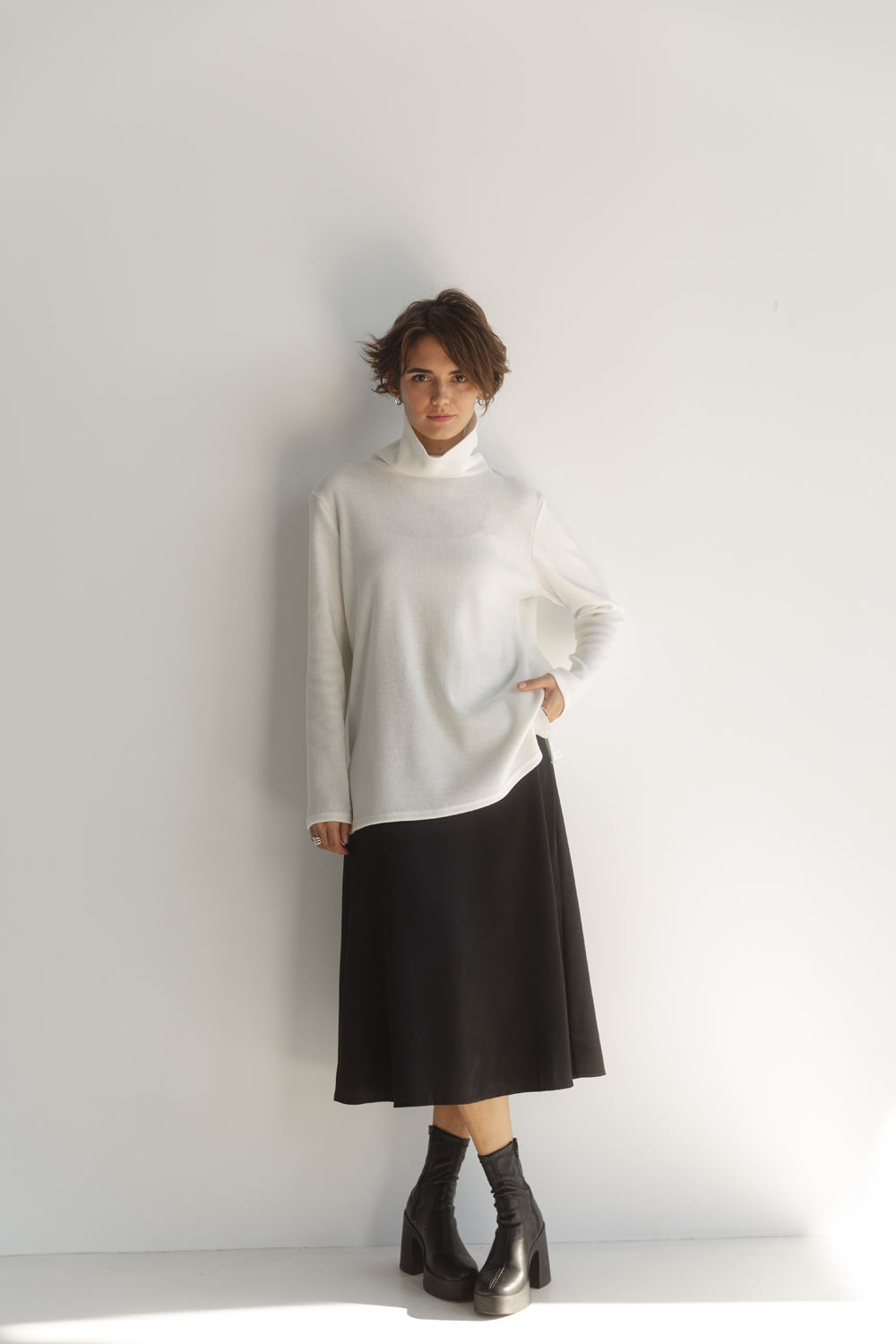
Fine knitwear: the art of layering for comfort and style in the off-season
The off-season is a time of fashion challenges and stylistic compromises. In the morning, the invigorating coolness makes you wrap yourself tighter in a scarf; during the day, the almost summer sun suddenly beats down, and with the onset of dusk, you crave comfort and warmth again. How to dress so that you feel comfortable throughout the day, without overheating indoors or freezing outdoors, and without sacrificing elegance? The answer lies in the art of layering, and its main and most versatile tool is high-quality fine knitwear. It is precisely fine knitwear that allows you to create flexible, well-thought-out, and functional looks that easily adapt to the whims of the weather, without adding unwanted bulk to the silhouette.Cardigans, sweaters
Forget about bulky, coarsely knitted sweaters that are hot on public transport and cold in gusts of wind. A modern demi-season wardrobe is about lightness, versatility, and well-thought-out combinations. By mastering a few simple rules, you can turn your wardrobe into a real constructor, where each element works to create a harmonious, cozy, and visually interesting silhouette. In this article, we will examine in detail why fine jumpers, turtlenecks, and cardigans have become an indispensable base for stylish layered outfits, how to choose them correctly, and what to combine them with.
Why fine knitwear is the foundation of a layered wardrobe?
The main and undeniable advantage of fine knitwear lies in its unique ability to provide warmth without excessive bulk. Unlike dense, heavy knits, it gently hugs the figure or drapes delicately, creating an ideal base for subsequent layers. This allows you to wear not only a fitted turtleneck but also a light jumper under a blazer, jacket, or over a shirt, without risking looking bulky. The secret lies in physics: the air layer formed between layers of clothing is the best natural thermal insulator. Fine knitwear helps to create several such insulating layers most effectively, retaining body heat and not restricting movement.
Modern materials from which such knitwear is made also play a key role in its popularity. Technologies have advanced significantly, and today, high-quality knitted fabrics are well-thought-out blends of fibers, each of which performs its own function:
- Viscose:Produced from wood cellulose, it gives the fabric silkiness, softness, and beautiful drape. Viscose is hygroscopic (absorbs moisture well), hypoallergenic, and very pleasant to the body, creating a cool sensation upon contact with the skin.
- Cotton:A natural fiber responsible for breathability and comfort. Cotton knitwear is ideal for base layers, as it allows the skin to “breathe.” In blends, it adds hygiene and softness to the garment.
- Merino wool and cashmere:These are premium natural fibers that elevate fine knitwear to a new level. Merino wool has unique thermoregulating properties — it warms in the cold and wicks away excess heat in the warmth. Cashmere, the down of mountain goats, is incredibly light, delicate, and yet several times warmer than ordinary wool. Products made from them are a true investment in comfort.
- Synthetic fibers (acrylic, polyester, elastane):Their addition to the composition brings purely practical benefits. Acrylic makes the product fluffier and warmer, polyester is responsible for durability and wrinkle resistance, and elastane (Lycra) provides elasticity, a perfect fit, and shape retention after washing.
It is precisely this well-thought-out balance of natural and synthetic fibers that makes modern fine knitwear a practical, durable, and versatile solution for any wardrobe.Sale
Basic elements for creating layered looks
To master the art of layering, you don't need to buy all the season's new arrivals. It's enough to have just a few key, timeless pieces in your wardrobe. These are the very 'bricks' from which you can build dozens of different combinations for work, walks, meetings with friends, and evening outings.
Turtleneck — the first and most important layer
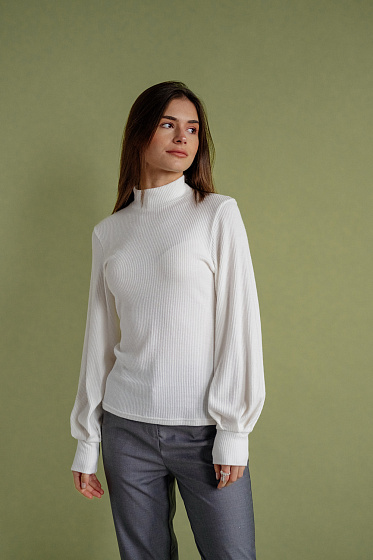
A warm and smooth turtleneck is the foundation of a layered look. It functions as a 'second skin,' warming, protecting the neck from wind, and creating a smooth, neutral base for subsequent elements. Choose models made of soft, elastic knitwear that fit comfortably to the body but do not constrict it. Neutral shades — black, graphite, beige, milky, camel — will be absolutely versatile and will get along with any item in your wardrobe. However, bright colors can also become an interesting accent, intriguingly peeking out from under a V-neck sweater, an unbuttoned shirt, or a jacket.
For example,the model from the selectionmade of soft knitwear with viscose in its composition is an excellent example of such a basic item. Its rich, deep color will add nobility to the look, and the comfortable cut with cuffed sleeves will ensure comfort throughout the day. It will look great on its own with a pencil skirt or palazzo trousers, as well as a base layer under a loose jumper, a classic jacket, or even a thick fabric sundress.
Women's Jumper — a versatile middle layer
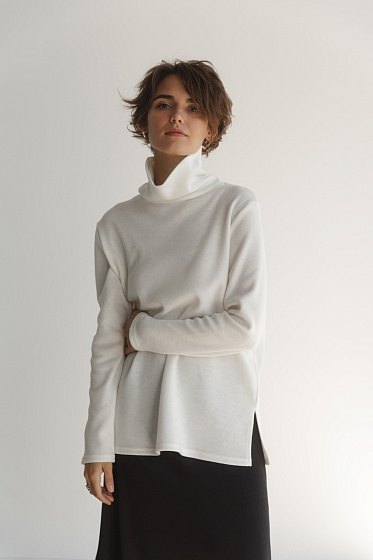
A women's jumper or a light knitted sweater is the heart of a layered outfit, its main stylistic component. Here you can and should play with cut, texture, and color. For creating elegant and relaxed looks, loose-fitting or oversized models are ideal. They do not restrict movement and allow you to easily wear a thin turtleneck, long sleeve, or classic shirt underneath, whose collar and cuffs will coquettishly peek out. Pay attention to details: a V-neck visually elongates the neck and opens up space for showcasing the bottom layer or jewelry, while side slits make the silhouette lighter and more dynamic, preventing the fabric from bulging at the hips.Cardigans
As an example, considerthe model from the selection. Its loose fit and high stand-up collar create a feeling of maximum coziness, and the 'angora rib' material adds a pleasant, soft texture. Such a sweater can be worn over a turtleneck on a cool day to create a voluminous but structured look. It pairs perfectly with both skinny jeans and flowing silk or satin skirts, playing on the contrast of textures.
Thin Cardigan — the final and most flexible touch
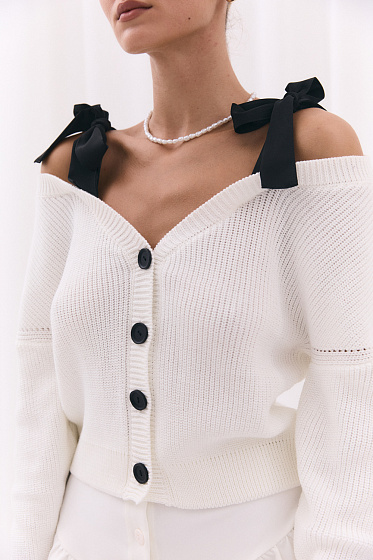
A thin cardigan is the most mobile and flexible element of a layered look. It's easy to put on if it gets chilly, and just as easy to take off and put in a bag in a warm room. This is the detail that allows you to instantly transform your look and adapt to changing conditions. Short button-up models, fastened all the way or just with the top button, emphasize the waist and pair well with dresses and high-waisted trousers. Long cardigans create a powerful vertical, visually elongating the silhouette and making the figure slimmer.
Don't be afraid to experiment with unusual models that can become the central element of your outfit. For example,the model from the selection— is not just a warming layer, but an independent design accent. It can be worn over a top, T-shirt, or turtleneck, creating a feminine and intriguing look. Details such as open shoulders and tie-up bows prove that layering is not only about warmth and practicality but also about individuality and modern fashion.
The Art of Combination: How to properly combine layers?
Creating a harmonious layered look is not just about putting several items one on top of another. It's a thoughtful work with texture, color, and proportions, so that the outfit looks well-thought-out and stylish, rather than sloppy and overloaded.Sweaters
Playing with textures and proportions
One of the main rules for a successful layered look is combining different textures. This makes the outfit visually richer, deeper, and more interesting. Start with the thinnest and smoothest materials closest to the body and move towards more voluminous and textured ones. The classic formula: a smooth viscose turtleneck, over it — a ribbed knit jumper or one with a “cable” pattern, and the look is completed by a smooth tweed jacket or a coat made of napped wool. The contrast of smooth and textured, matte and shiny always looks winning.
Equally important is the balance of proportions. To avoid turning into a “cabbage,” follow a simple rule: combine a voluminous top with a narrow bottom, and vice versa. If you choose a bulky knitted sweater, the best pair for it will be skinny jeans, leggings, a straight skirt, or a pencil skirt. And conversely, a fitted turtleneck and a cropped cardigan will look great with wide palazzo trousers or an A-line skirt.
Color palette for layered looks
Working with color is another key to success. There are several win-win strategies:
- Monochrome:Combining several shades of one color (for example, from light beige to coffee or from sky blue to dark blue) always looks expensive, elegant, and sophisticated. This technique creates a unified color vertical, which visually slims.
- Neutral base + accent:This is the simplest and most effective method. Build an outfit from items in neutral, calm tones (gray, milky, black, beige) and add one bright element. This could be a vibrant turtleneck under a restrained gray cardigan, a bright scarf, or a bag. The accent will instantly enliven the look without overloading it.
- Analogous harmony:For more advanced fashionistas, a combination of analogous colors — those located next to each other on the color wheel (for example, blue, light blue, and purple; or orange, red, and burgundy) — will be suitable. Such combinations look harmonious and non-trivial.
Practical tips and care for fine knitwear
For fine knitwear to last long, not lose its appearance, not pill, and not deform, it requires proper and gentle care. Always pay attention to the label with the manufacturer's recommendations — this is the main source of information.
- Washing:Most blended fiber products, especially those containing wool or viscose, prefer delicate machine washing at a temperature no higher than 30°C and low spin speeds (400-600 rpm). The ideal option is hand washing in cool water. Use special liquid detergents for delicate fabrics or wool.
- Drying:Never wring out knitwear! Gently squeeze out excess water by wrapping the item in a terry towel. Knitwear should be dried strictly horizontally on a drying rack or a clean towel, away from direct sunlight and heating appliances. Drying on hangers will lead to irreversible stretching of the item under its own weight.
- Storage:Fine knitwear should be stored folded on a shelf in a wardrobe. Hangers can deform the shoulder line and lead to stretching.
- Fighting pilling (bobbles):The appearance of pilling is a natural process for many, even expensive, natural materials. They can be easily removed with a special lint remover, which carefully cuts off matted fibers without damaging the fabric.
Recall how in a cafe a girl easily takes off a stylish cardigan, remaining in an elegant top, while her companion suffers in one, but too warm for the room, sweater. This is the whole charm and magic of layering — it gives freedom, flexibility, and adaptability, allowing you to feel appropriate and comfortable in any situation. This is not just a fleeting trend, but a sensible, conscious, and incredibly stylish approach to forming your wardrobe, especially in conditions of changeable climate.