
 Free delivery in Ukraine upon full payment of the order
  Return of goods within 14 days

Knitwear for Layering: How to Create Warm and Stylish Everyday Looks
With the arrival of cool weather, we face an eternal dilemma: how to dress warmly without sacrificing style? The answer is simple and elegant — layering. This technique not only saves you fr om the whims of the weather but also opens up endless possibilities for fashion experiments. And the main tool in creating cozy and thoughtful outfits is high-quality women's knitwear. It is pleasant to the body, pliable, and diverse in textures. In this article, we will analyze how to turn ordinary jumpers, cardigans, and turtlenecks into the basis for dozens of relevant and comfortable looks that will be appropriate both in the office and for a walk in the park.Cardigans, Sweaters
Why is layering not only warm but also stylish?
The art of combining several layers of clothing is much more than just a way to keep warm. It is a thoughtful stylistic technique that gives the look depth, dynamism, and individuality. Firstly, layering is incredibly practical. You can easily adapt to temperature changes throughout the day: remove the top layer in a warm room or put on a cardigan when the evening wind blows. Remember how pleasant it is to enter a cozy cafe from a frosty street and, after taking off your coat and bulky sweater, remain in an elegant thin long-sleeve top.
Secondly, it is a powerful tool for visual figure correction and creating interesting silhouettes. By playing with length, volume, and textures, you can emphasize advantages and hide nuances. For example, an elongated cardigan over a shorter top creates a vertical line that visually elongates the silhouette. The combination of a smooth base layer and a voluminous knitted jumper adds texture to the look and makes it more complex and memorable. Ultimately, layering allows you to look at familiar wardrobe items in a new way and extend their life, incorporating summer tops or dresses into autumn-winter ensembles.
The Foundation of the Look: Choosing a Base Layer
Any successful layered look begins with the right foundation — the first, next-to-skin layer. Its main task is to be comfortable, breathable, and thin enough not to create unnecessary bulk under subsequent layers. Give preference to items made from soft, pliable materials that feel pleasant on the skin. These can be turtlenecks, long-sleeve tops, or long-sleeve t-shirts.
When choosing a material, pay attention to blended fabrics based on viscose or cotton with added elastane. They are breathable, do not cause irritation, and provide freedom of movement. Neutral colors — white, milky, beige, gray, black — will be the most functional base, as they easily combine with any other shades in your wardrobe.
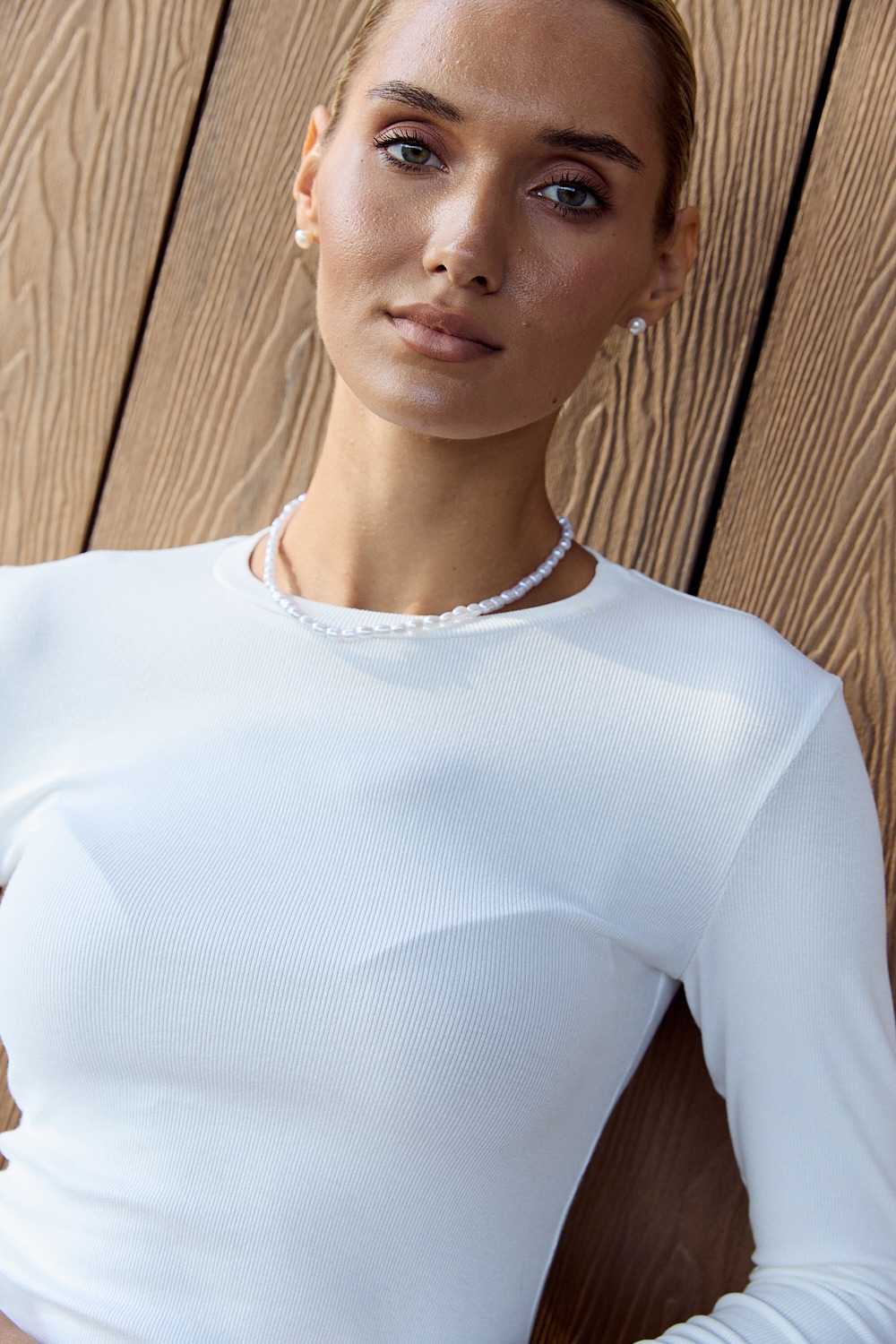
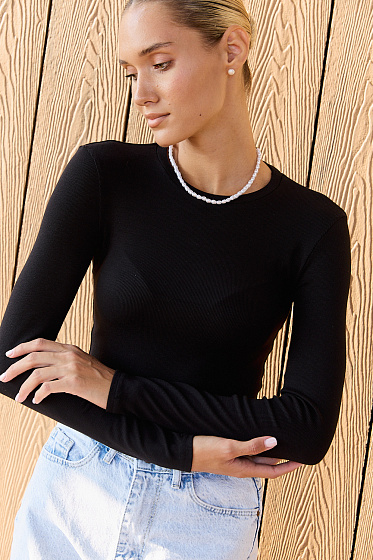
A good example of such a basic element isa model from the selection. Its fitted cut and round neckline make it practically invisible under a sweater or shirt, and its composition (93% viscose, 7% spandex) ensures comfort throughout the day. This is the very item that will become an indispensable base for dozens of different combinations, from business to relaxed.
The Heart of the Outfit: The Middle Layer for Warmth and Accent
The middle layer is the main character of your look. It sets the mood, adds color and volume. Jumpers, sweaters, sweatshirts, or thin cardigans can act in this role. Here you can boldly experiment with cut and texture. If your base layer is fitted, the middle one can be looser, creating an interesting contrast of volumes. This is not only relevant but also very comfortable.
Pay attention to oversized models — they do not lose their popularity and work perfectly in layered outfits. The loose cut allows air to circulate, creating additional thermal insulation, and at the same time does not restrict movement. Interesting details, such as a high collar, side slits, or an asymmetrical cut, will make the look more dynamic.Sale
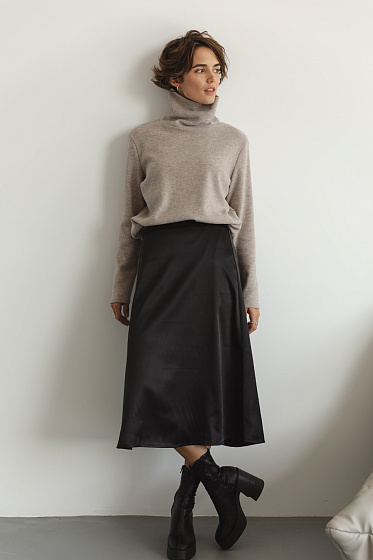
For example,a model from the selection— an excellent candidate for the role of a middle layer. Its loose silhouette and high stand-up collar provide comfort, while side slits add lightness and allow the bottom layer to delicately peek out, creating a thoughtful nonchalance. Such a jumper can be worn over a basic long-sleeve with jeans for a walk or combined with a flowing skirt and chunky boots for a bolder look.
Playing with Textures and Cuts
For a layered look not to appear boring, it's important to combine different materials and silhouettes. This is one of the key principles that distinguishes a stylish outfit from a simple pile of clothes. Try combining smooth knitwear of a basic turtleneck with the textured knit of a voluminous sweater. Or wear a soft cashmere jumper over a silk blouse so that the collar and cuffs coquettishly peek out. The contrast of textures always looks winning and expensive.
Don't be afraid to play with length either. A classic trick is when the bottom layer is slightly longer than the top. For example, the hem of a shirt peeking out from under a cropped jumper, or the bottom of a long long-sleeve under a sweater. This adds vertical lines and makes the look visually more complex. Remember that unpleasant feeling when one sweater snags on another or electrifies? Properly selected layers in terms of composition and texture help avoid this practical inconvenience too.
The Finishing Touch: Cardigan as the Top Layer
A cardigan is one of the most versatile elements of a woman's wardrobe and an ideal third layer. It can be both cozy and voluminous, or strict and structured, replacing a jacket or a light coat. A long, chunky knit cardigan will add a relaxed feel to the look, while a cropped button-up model will emphasize the waist and make the outfit more put-together.
A cardigan allows for easy transformation of an outfit. Throwing it over a simple combination of “long-sleeve + jeans” instantly makes the outfit more complete. When choosing a cardigan for a layered look, it's important to consider its density and cut. It should be loose enough to comfortably accommodate not only the base layer but also the middle layer, for example, a thin jumper.
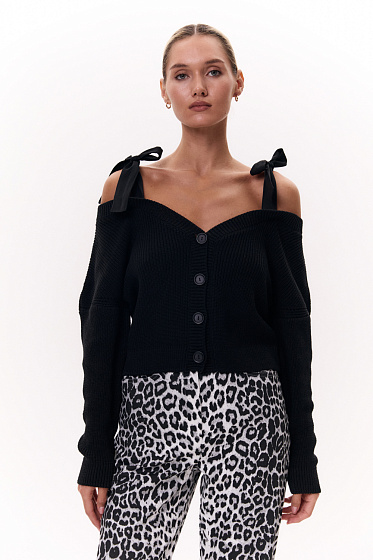
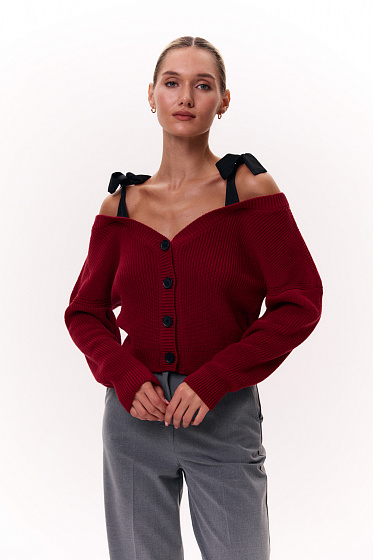
To create a more elegant or romantic look, you can choose a model with interesting details. Thus,the model from the selectionis not just an item for warmth, but a full-fledged accent. Its design with open shoulders and bow ties suggests that a concise base layer will be worn underneath — for example, a thin-strap top or a smooth bodysuit. Such a cardigan will become the central element of an outfit for a trip to the theater or a meeting with friends, wh ere outerwear is not required.
Practical Scenarios: Assembling Outfits for Life
Theory is good, but let's see how the principles of layering work in practice in real-life situations.Cardigans
- For the office.Combine a thin knit turtleneck in a neutral color with classic trousers or a pencil skirt. As a second layer, add a V-neck jumper or a thin button-up cardigan. This will allow the turtleneck collar to neatly peek out, creating a strict but not boring look.
- For a weekend walk.Here, comfort comes first. A cotton long-sleeve can be the base. On top, wear a voluminous oversized sweater or a cozy sweatshirt. Complete the look with your favorite jeans, comfortable shoes, and a warm coat. In such an outfit, you will be comfortable both in the park and in a cafe.
- For a creative meeting or a date.Try a bolder combination. Wear a silk or satin slip dress, and on top, a voluminous knitted jumper. The contrast of delicate fabric and cozy knitwear looks very impressive. Or use an accent cardigan over a concise top and a midi skirt.
Checklist: How to Avoid the “Cabbage” Effect?
To make layering look stylish, not bulky, follow a few simple rules:
- Maintain a balance of volumes.If you have a voluminous top (e.g., an oversized sweater), choose a narrower bottom (skinny jeans, straight jeans, pencil skirt). And vice versa.
- Start with thin fabrics.The thinnest and most form-fitting layer should always be closest to the body. Each subsequent layer can be slightly denser and looser.
- Use no more than 3-4 layers.Usually, a base layer, a middle layer (sweater/jumper), and an outer layer (cardigan/jacket) are sufficient, not counting outerwear.
- Play with necklines.Make sure the necklines of different layers harmonize. For example, a round neckline looks good under a V-neck, and a stand-up collar under a round one.
- Show the layers.Don't hide them! Let the cuffs, collar, or hem of the bottom layer peek out a little. This is the essence of the technique.
Frequently Asked Questions about Layering and Knitwear
We have compiled answers to the most popular questions that will help you master the art of combining knitwear.
What fabrics are best for the base layer?
For the first layer, which directly contacts the skin, it is best to choose natural or blended fabrics with good breathability. Viscose, modal, thin cotton, or merino wool are ideal. They are pleasant to the body, wick away moisture, and allow the skin to breathe, which is important during temperature changes.
How to wash women's knitwear so it doesn't deform?
Knitwear requires gentle care. Always read the instructions on the label. General recommendations: choose a delicate wash cycle at a temperature not exceeding 30-40 degrees, use liquid detergents for wool and delicate fabrics, avoid intensive spinning. It is best to dry knitwear horizontally on a towel, away from direct sunlight and heating appliances.
Can different shades of one color be combined in a layered look?
Yes, and this is one of the most elegant techniques. Monochrome looks, built on combining different shades of one color (for example, milky, beige, and cappuccino), always look expensive and well-thought-out. To prevent such an outfit from looking flat, combine different textures: smooth base knitwear, a textured knit sweater, and possibly corduroy trousers or a leather skirt.
Layering with knitwear is not a strict set of rules, but an exciting game with fashion that provides comfort and self-confidence. Don't be afraid to experiment, combine unexpected textures and colors, and find your ideal formulas for warmth and style. Your wardrobe is full of possibilities, and the cool season is the best time to unlock them.