
 Free delivery in Ukraine upon full payment of the order
  Return of goods within 14 days

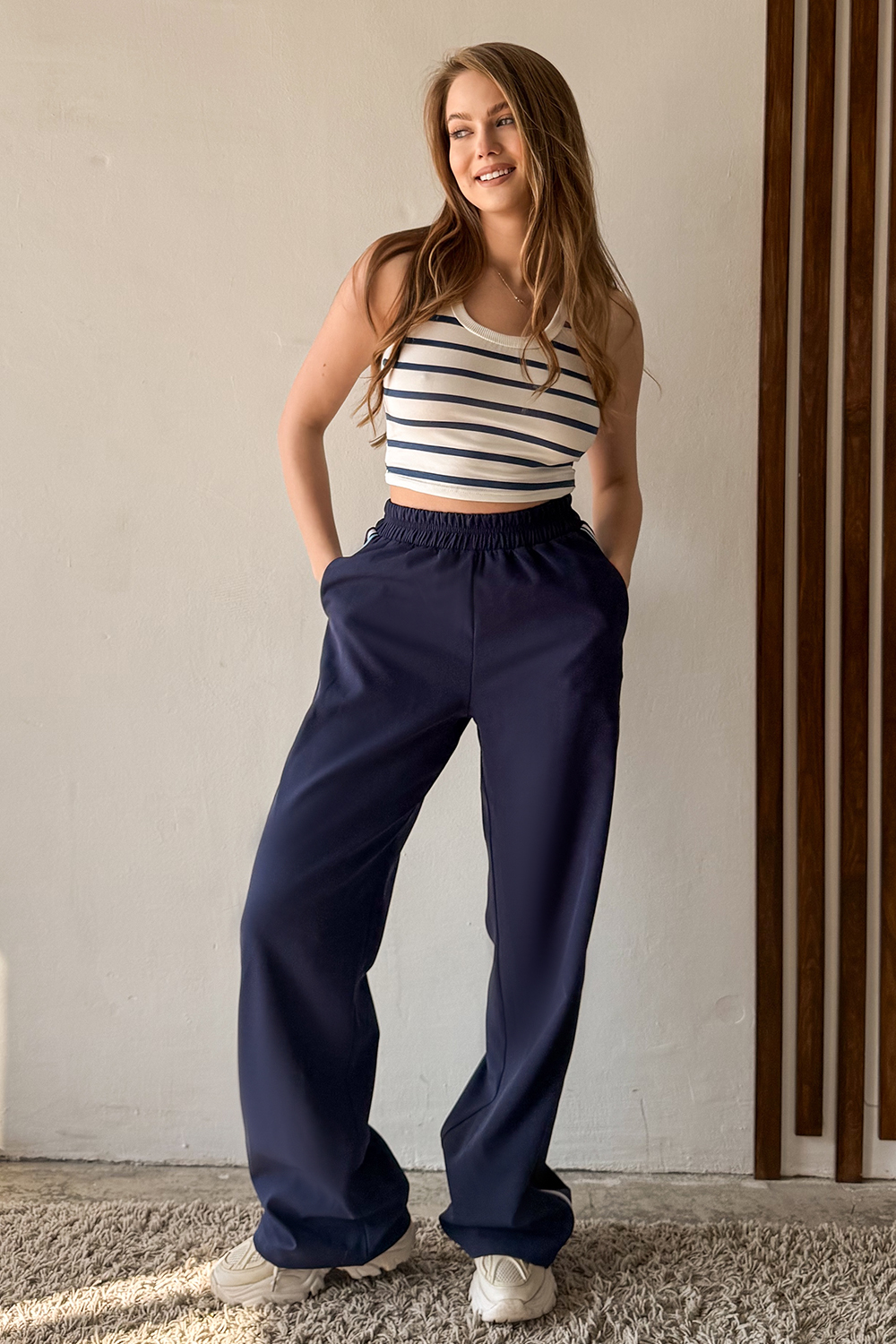
Colored trousers in the office: how to wear brightly and maintain a professional look
The business dress code is traditionally associated with a strict palette: black, gray, dark blue. This classic range is undoubtedly reliable and versatile, but over time it can make your work wardrobe predictable and even boring. Surely you have often caught yourself thinking that in the morning, standing in front of the closet, you choose the usual dark trousers again and again. This is convenient, fast, and does not require long deliberation. But what if there is a simple way to add individuality, freshness, and even strategic expressiveness to your business image, without violating professional rules? The answer is simple: colored trousers. They are capable of transforming your office style, giving it dynamism and modern chic, while maintaining the necessary competence and confidence.Sportswear
Choosing a shade: the art of balance
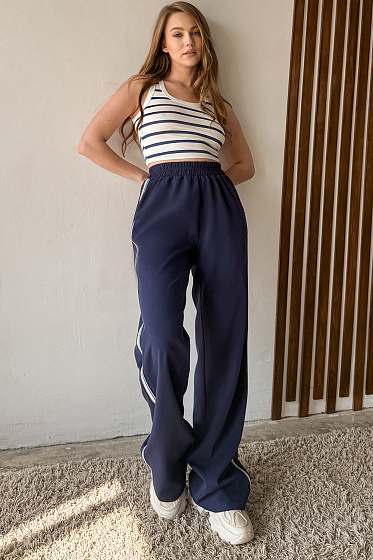
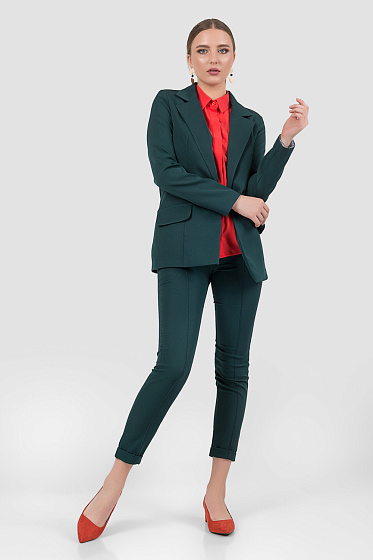
The key to successfully introducing colored trousers into your office wardrobe is the right choice of shade. Your goal is not to shock, but to refresh the look, so it is worth preferring deep, muted, and noble tones. Avoid overly bright, neon, or flashy colors, which are better suited for informal settings. Instead, pay attention to shades that look expensive and restrained.
Consider options such as:
- Deep burgundy or wine:An excellent alternative to black, adds luxury and warmth.
- Emerald green or forest:Gives the look freshness and elegance, especially good with neutral shades.
- Dark blue or cobalt:If you are used to classic blue, its more saturated variations will add variety, while remaining within strict limits.
- Mustard or olive:These earthy tones look very stylish and professional, especially during the autumn-winter period.
- Powder pink or light blue:For softer and lighter looks, ideal for the spring-summer season, if your office allows a more relaxed dress code.
When choosing a shade, also consider your color type and the overall palette of your wardrobe. Trousers should harmonize with your existing blouses, jackets, and accessories to create cohesive and well-thought-out ensembles. Remember that even the boldest color can look appropriate if it is correctly chosen for saturation and combined with other elements of the look.
Combining with tops: harmony of the look
After choosing the ideal shade of colored trousers, the next step is selecting the top. A simple rule applies here: the brighter or more saturated the trousers, the more neutral and restrained the top should be. This will help create a balanced and professional look, where colored trousers act as an accent element rather than overwhelming the overall appearance.
Ideal companions for colored trousers:
- Classic neutral shades:White, milky, black, gray, beige, cream. These colors always look winning and allow colored trousers to be the center of attention. For example, burgundy trousers with a white silk blouse or emerald ones with a gray cashmere jumper.
- Monochrome combinations:Creating a look in one color scheme, but with different shades. For example, dark blue trousers with a blouse a shade lighter or a jacket in the same tone. This looks very elegant and elongates the silhouette.
- Prints and patterns:If you want to add a print, choose it carefully. Minimalist patterns (thin stripe, small polka dot, abstraction) with one of the colors present in the trousers, or with a neutral base, will work best. Make sure the print is not too large or distracting.
- Textural contrasts:Combining smooth trousers with a top of an interesting texture (for example, a silk blouse, knitted cardigan, tweed jacket) will add depth to the look without using additional colors.
It is important to remember that the entire look should appear harmonious. Avoid combining several bright colors if you are unsure of your styling skills. It is better to start with one bright accent and gradually experiment.
Cut and fabric: the foundation of professionalism
Even the most beautiful color can lose its appeal if the trousers fit incorrectly or are made from unsuitable fabric. In an office dress code, cut and material play a key role in creating a competent and well-groomed appearance.
What to pay attention to:
- Ideal cut:Trousers should fit impeccably. Avoid overly tight models, which can look informal, or, conversely, too baggy ones, creating a sloppy appearance. Classic straight trousers, slightly tapered towards the bottom (cigarette), or elegant wide palazzo trousers are excellent options. Length also matters: trousers should not be too short or drag on the floor.
- Quality fabrics:Give preference to dense, shape-retaining materials. Wool, blended fabrics based on viscose, cotton with elastane, crepe — are ideal for the office. These materials wrinkle less, look presentable, and provide comfort throughout the day. Avoid thin knitwear, linen (if it wrinkles heavily), and denim, which are usually considered too casual for a business environment.
- Absence of unnecessary details:For the office, choose trousers with a minimal number of decorative elements. Patch pockets, large zippers, an abundance of buttons, or overly conspicuous hardware can distract and lower the level of formality. Clean lines and classic design will always be a priority.
Remember that investments in quality trousers with a good cut will pay off handsomely, as they will become the basis for many stylish and professional looks.
Accessories and Footwear: Finishing Touches
Properly chosen accessories and footwear can either emphasize the professionalism of your look with colored trousers or completely ruin it. Balance and restraint are also important here.
Selection recommendations:Trousers
- Footwear:Choose classic models that match the business style. Low-heeled pumps, elegant loafers, oxfords, derbies, or neat ankle boots are ideal options. The color of the footwear is best chosen neutral (black, beige, brown, dark blue) or to match one of the neutral elements of your look. Avoid sports shoes, overly open sandals, or bright, flashy colors.
- Bags:A business bag should be structured and functional. Leather briefcases, totes, or classic shopper bags in neutral tones will be an ideal addition. Avoid overly bulky or informal models.
- Jewelry:Minimalism is your best friend. Thin chains, elegant stud earrings, classic watches, or a single ring will be appropriate. Avoid massive, overly shiny, or ethnic jewelry. The goal is to add sophistication, not to distract attention.
- Belts:If trousers require a belt, choose one that matches the footwear or bag, or a classic neutral option. It should be made of quality leather and have a discreet buckle.
Accessories should complement the look, not compete with colored trousers for attention. Let the trousers be the main accent, and the other details will only emphasize your elegance.
Conclusion
Colored trousers are not just a fashion trend, but a powerful tool to refresh your business wardrobe. They allow you to add individuality and style without going beyond the professional dress code. The main thing is to approach their selection and combination consciously, paying attention to the shade, cut, fabric quality, and harmony with all other elements of the look.
Don't be afraid to experiment, but do it thoughtfully. Start with one or two pairs of trousers in muted, noble shades, and then, once you're comfortable, you can gradually expand your palette. Remember that your office style is a reflection of your competence and confidence. Colored trousers will help you look not only professional, but also
Compare the situation on weekdays and weekends: often the selection criteria in these scenarios differ, and this helps to narrow down the shortlist more precisely.
Separately assess how well the item withstands repeated looks: if it easily combines with at least three basic items, this is a strong signal of selection quality.
Before the final decision, it is useful to fix one critical parameter and two desirable ones: this makes it easier not to settle for a compromise that doesn't suit your rhythm.
For a practical result, compare not only the visual effect, but also the fabric's behavior, the appropriateness of the cut, and the realism of care in everyday use.
The final check should answer the question: how sustainable will the solution be after a month, and not just at the moment of the first fitting.
Compare the situation during the week and on weekends: often the selection criteria in these scenarios differ, and this helps to narrow down the shortlist more precisely.
Separately assess how well the item withstands image repeatability: if it easily combines with at least three basic items, this is a strong signal of selection quality.
Before the final decision, it is useful to fix one critical parameter and two desirable ones: this makes it easier not to fall into a compromise that does not suit your rhythm.Sportswear
For a practical result, compare not only the visual effect, but also the fabric's behavior, the appropriateness of the cut, and the realism of care in everyday use.
The final check should answer the question: how sustainable will the solution be after a month, and not just at the moment of the first fitting.
Compare the situation during the week and on weekends: often the selection criteria in these scenarios differ, and this helps to narrow down the shortlist more precisely.
Separately assess how well the item withstands image repeatability: if it easily combines with at least three basic items, this is a strong signal of selection quality.
Before the final decision, it is useful to fix one critical parameter and two desirable ones: this makes it easier not to fall into a compromise that does not suit your rhythm.
For a practical result, compare not only the visual effect, but also the fabric's behavior, the appropriateness of the cut, and the realism of care in everyday use.
The final check should answer the question: how sustainable will the solution be after a month, and not just at the moment of the first fitting.
Compare the situation during the week and on weekends: often the selection criteria in these scenarios differ, and this helps to narrow down the shortlist more precisely.
Separately assess how well the item withstands image repeatability: if it easily combines with at least three basic items, this is a strong signal of selection quality.
Before the final decision, it is useful to fix one critical parameter and two desirable ones: this makes it easier not to fall into a compromise that does not suit your rhythm.
For a practical result, compare not only the visual effect, but also the fabric's behavior, the appropriateness of the cut, and the realism of care in everyday use.