
 Free delivery in Ukraine upon full payment of the order
  Return of goods within 14 days

How to Choose the Perfect Women's Coat: A Complete Guide to Styles, Fabrics, and Colors
Choosing the perfect coat is not an easy task, as it is a key investment in your wardrobe for several seasons to come. How not to get lost among the multitude of styles, from strict classics to relaxed oversized? Which material will keep you warmest and how to care for it? Our complete guide will...
How to Choose the Perfect Women's Coat: A Complete Guide to Styles, Fabrics, and Colors
With the onset of the cool season, a coat becomes not just a necessity, but the main element of the wardrobe that sets the tone for the entire look. It is that very item that meets the world first, and its choice determines not only comfort but also your self-perception. A correctly chosen coat can transform even the simplest outfit, adding elegance and confidence. It is like a frame for a painting, framing your style and completing the silhouette. But how not to get lost in the variety of styles, materials, and shades? This guide will help you understand all the nuances and make a conscious choice that will delight you for more than one season.Sportswear
Why a Coat is an Investment in Your Style
Buying a coat is not a spontaneous decision. Unlike fleeting seasonal trends, quality outerwear is a long-term investment in your wardrobe and image. A good coat lasts several years, so its selection should be approached thoughtfully and rationally. The concept of 'cost per wear' works best here: an expensive but high-quality item that you will wear for years ultimately turns out to be more profitable than several cheap alternatives that lose their appearance after the first season. It should not only keep you warm but also reflect your individuality, harmonize with the main part of your wardrobe, and suit your lifestyle. Imagine a morning stroll through an autumn city: the rustling of leaves underfoot, cool air, and you, wrapped in a cozy and stylish coat. It is precisely such moments that create a mood, and clothing plays no small role in this.
When choosing, it is worth asking yourself a few key questions that will help narrow down the search. Where will you wear it most often: to the office with a strict dress code, for walks with friends, on trips? What clothing style predominates in your closet: classic, casual, bohemian, sporty? What is the climate in your region – do you need protection from severe frosts or a light option for a European winter? Do you travel by car or public transport? The choice of optimal length depends on this. Answers to these questions will help you focus on the models that truly suit you. After all, the ideal coat is one in which you feel like yourself: confident, comfortable, and irresistible.
Understanding Styles: From Timeless Classics to Bold Oversize
The silhouette of a coat is its foundation. It determines how the item will fit the figure, what proportions it will create, and what it will combine with. Let's look at the most popular and functional styles that have become the basis for many modern interpretations.Shirts, blouses
Classic Single-Breasted or Double-Breasted Coat
This is a timeless standard of elegance and restraint. A straight or slightly fitted cut, an English collar, a clear shoulder line — such models never go out of style. Double-breasted coats with two rows of buttons look more strict, formal, and allude to military aesthetics, adding a sense of composure to the look. Single-breasted models are more concise and minimalistic. A classic mid-length coat (to the knee or slightly below) is a versatile base that looks equally good with a business suit, jeans, and sneakers. It suits almost any body type, visually elongating the silhouette and creating slender vertical lines.
Wrap Coat with a Belt
This style came into everyday fashion from loungewear and gained popularity due to its relaxed chic and unparalleled comfort. The absence of buttons and the emphasis on the waist with a belt create a soft, feminine, and enveloping silhouette. Such a coat drapes beautifully, emphasizing the curves of the figure without restricting movement. It is ideal for creating layered looks, as it is easy to wear a bulky sweater, cardigan, or jacket underneath. A wrap coat, especially one made of soft wool or cashmere, is associated with the Italian concept of 'sprezzatura' — studied carelessness. This is an excellent choice for those who value comfort but are not willing to sacrifice elegance.
Modern Silhouettes: Oversize and Cocoon
Loose-fitting coats, or oversize, have remained at the peak of popularity for several seasons in a row. Their main features are intentionally increased volume, a dropped shoulder line, and midi or maxi length. This style creates a feeling of fragility and protection, and also allows playing with proportions and comfortably wearing the warmest sweaters underneath. A cocoon coat has a similar volume in the upper part but smoothly tapers towards the bottom, creating a rounded, cozy silhouette reminiscent of a cocoon. These models require a careful approach to styling: to prevent the look from appearing baggy, they are best combined with a narrower bottom — skinny jeans, leggings, a straight skirt, or a sheath dress. This creates a harmonious balance of volumes.Shorts
Trench Coat
Originally created for British officers, the trench coat has become an absolute classic of the women's wardrobe. It is easily recognizable by its characteristic details: double-breasted fastening, turn-down collar, epaulets, cuffs with straps, and a belted waist with a buckle. Most often, it is sewn from gabardine — a dense, water-repellent fabric. This is an ideal option for the changeable weather of the off-season. The trench is incredibly versatile: it is equally appropriate with a business suit, a little black dress, and sneakers. It is a symbol of impeccable taste that adds a touch of Parisian chic to any look.
Duffle Coat (Duffle Coat)
Another style with a military history, originating from the wardrobe of British sailors. The duffle coat is the embodiment of comfort and practicality. Its distinctive features are a straight, loose cut, a large hood, patch pockets, and original elongated 'walrus tusk' fasteners on leather loops. Traditionally, it is sewn from thick woolen fabric. It's an excellent choice for long walks and country trips. The duffle coat perfectly fits into casual and preppy styles, combining excellently with jeans, corduroy trousers, and sturdy boots.
Material matters: what to look for on the label
Not only the appearance of the coat, but also its thermal properties, wear resistance, and care requirements depend on the fabric composition. Quality material is a guarantee that the item will last a long time, retain its shape, and provide comfort.Sportswear
- Wool and its varieties:Natural wool (wool) is a classic and best choice for winter and demi-season coats. It perfectly retains warmth, allows the skin to breathe (has good hygroscopicity), and is resistant to creasing. Pay attention to the varieties:merino woolvery soft and fine,alpaca— light, silky, and very warm, whilemohairgives the fabric a fluffy texture.Cashmere (cashmere)— a more expensive and delicate variety of wool obtained from the undercoat of mountain goats. Coats made of cashmere or with its addition are incredibly soft, light, and warm, but require delicate care.
- Blended fabrics:Manufacturers often add synthetic fibers such as polyester, acrylic, or nylon to wool. There's no need to be afraid of this. A small percentage of synthetics (up to 20-30%) makes the fabric more durable, wear-resistant, and less prone to pilling. Polyester helps maintain shape, and nylon increases strength. However, a coat consisting predominantly of synthetics will not 'breathe' well and will provide significantly less warmth than a natural one.
- Textured wool fabrics:These are not so much compositions as types of weaving.Tweedhas a characteristic melange weave and is associated with British style.Bouclé— a fabric with a knotty, loose surface, which became popular thanks to Coco Chanel.Drap— a dense, heavy, and very warm fabric that holds its shape well and protects from wind, ideal for harsh winters.
- Cotton (gabardine):Dense cotton, primarily gabardine, is used for tailoring trench coats. It provides good protection from wind and moisture, while remaining a breathable material.
How to choose a color that will flatter you
The color of a coat is the first thing that catches the eye. It can either harmoniously complement your look or become its main accent. The choice depends on your color type, style, and boldness.
A foolproof base
Neutral colors are the foundation of foundations. They easily combine with other shades and accessories, making them a practical choice for everyday.
- Black:An eternal classic that is always relevant. A black coat looks strict, elegant, and suits everything. However, it can emphasize pale skin and requires careful maintenance, as any speck of dust is visible on it. To soften the look, choose models made from textured fabrics or wear it with a bright scarf.
- Beige (camel):A warm, noble shade that is associated with luxury and comfort. A beige coat refreshes the complexion and adds softness to the look. Shades vary from sand to caramel, allowing you to choose the perfect tone for your appearance.
- Grey:A versatile and multifaceted color. From light grey melange to dark graphite (anthracite) — any shade looks restrained and stylish. Grey pairs excellently with both bright and pastel colors, serving as an ideal background for experiments.
- Dark blue (Navy):A wonderful alternative to black. Deep blue looks no less elegant, but at the same time softer and more interesting. It is versatile and suits almost everyone.
Bright accents and prints
If your wardrobe already includes a basic coat, it might be worth considering bolder options. A bright coat can lift your spirits on a gloomy day and make you the center of attention. Wine, emerald, rich blue, mustard, or even red — such colors can become the hallmark of your style. The main rule is that the rest of the outfit should be more restrained so as not to overload it. Don't forget about prints either. Classic checks (tartan, Prince of Wales) or houndstooth are elegant patterns that never lose their relevance and add dynamism to the look.Shirts
What to wear with a coat: ideas for harmonious looks
The ideal coat is one that easily fits into your existing wardrobe and allows you to create many diverse outfits. The principle is simple: maintain a balance of volumes and play on the contrast of styles. A classic coat can be "toned down" in formality with a hoodie and sneakers, while an oversized model, conversely, can be made more elegant by wearing it with a slip dress and heeled ankle boots.
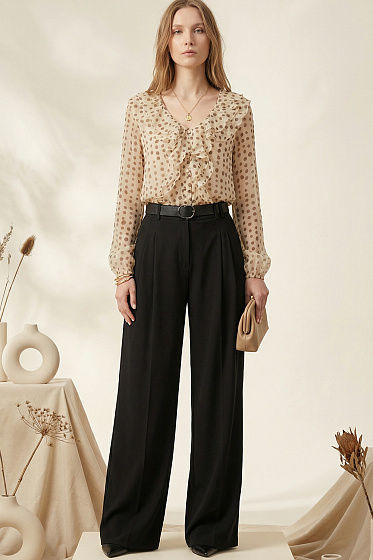
Many combinations can be created under a classic trench or straight coat. For example, for an elegant office or evening outing, a sophisticated blouse will perfectly complement the coat. A model, such as the "Cream Blouse with Double Ruffles" made of Tencel, will add tenderness to the look. Its V-neckline and delicate ruffles will elegantly peek out from under the coat collar, creating a finished and thoughtful appearance.
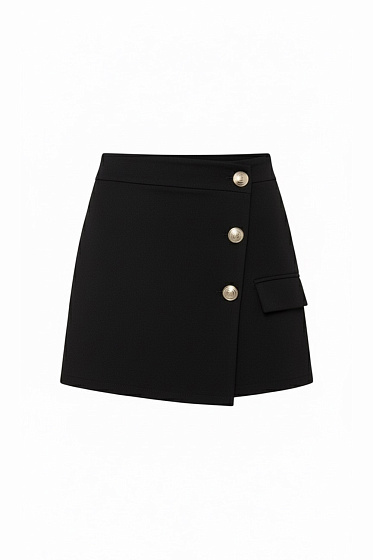
For more relaxed and modern looks, especially in warm autumn weather, a coat can be draped over an outfit with a skirt or shorts. An interesting solution could be the "Chocolate High-Waisted Skirt-Shorts". Their cut combines the comfort of shorts with the elegance of a skirt, and the viscose suiting fabric holds its shape well. Such a combination with a light coat and ankle boots will create a stylish and dynamic urban look.
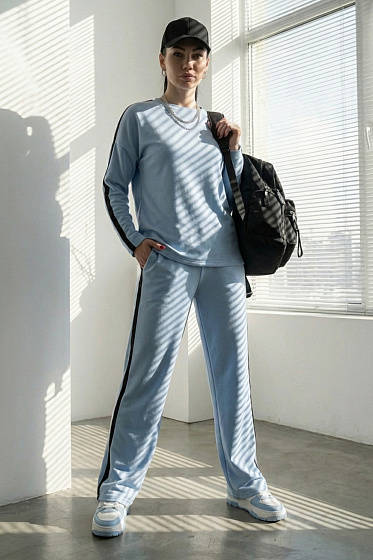
Even on a day off, when maximum comfort is desired, a coat can be part of a stylish outfit. A voluminous oversized coat can be boldly draped over a cozy sports set. For example, the "Blue Walking Suit with Side Stripes" made of soft three-thread fabric will be an excellent base for a long walk in the park. The combination of sports style and classic outerwear is a modern approach that demonstrates your ability to play with fashion.
Brief Checklist for Choosing a Coat
- Determine the purpose:For what weather (winter, off-season) and what occasions (office, walks) do you need a coat?
- Choose a style:Consider your body type and lifestyle. Be sure to try on different models to understand what suits you best.
- Examine the composition:Prioritize fabrics with a high content of natural fibers (wool, cashmere). This is a guarantee of warmth and durability.
- Check the quality:Inspect the seams — they should be even and neat. Check the lining (it should be well-sewn) and hardware (buttons, zippers).
- Assess the fit:The coat should not restrict movement, especially in the shoulders and armholes. Try raising and spreading your arms, and squatting. Make sure a warm sweater or jacket can fit underneath. The shoulder line should be in place (in classic models) or look harmoniously dropped (in oversized models).
- Think about the color:Choose a shade that harmonizes with your wardrobe and color type. A basic color is more practical, while a bright one will become a striking accent.
- Pay attention to details:Pockets, collar, belt, vents — all these elements affect the overall look and functionality. Make sure they are made with quality and are comfortable for you.
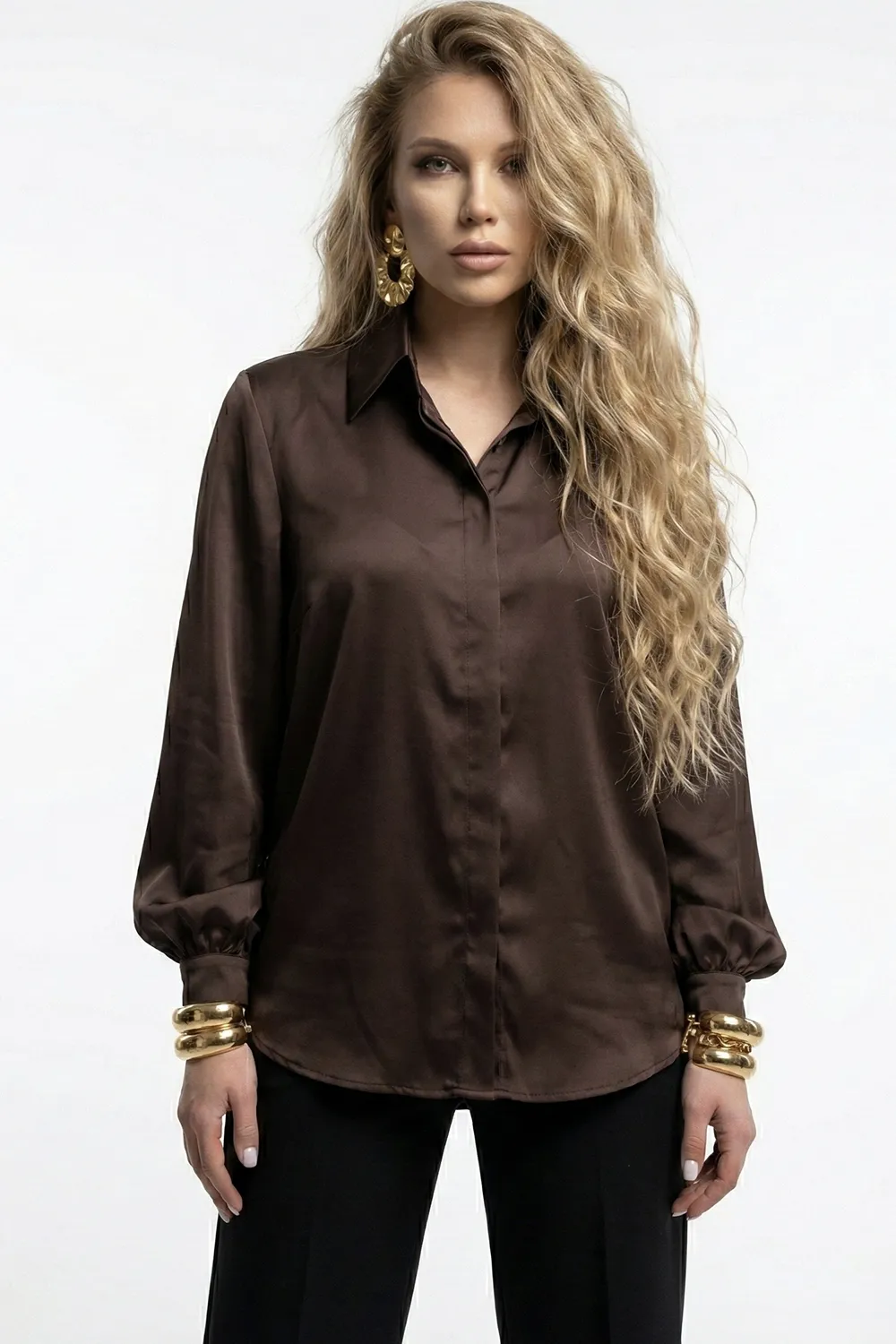 The Confidence Blouse: Elevating Your Presence Through Style
Discover how a well-chosen blouse can become your secret weapon in creating a confident and influential image. From fabric and cut selection to sty...
The Confidence Blouse: Elevating Your Presence Through Style
Discover how a well-chosen blouse can become your secret weapon in creating a confident and influential image. From fabric and cut selection to sty...
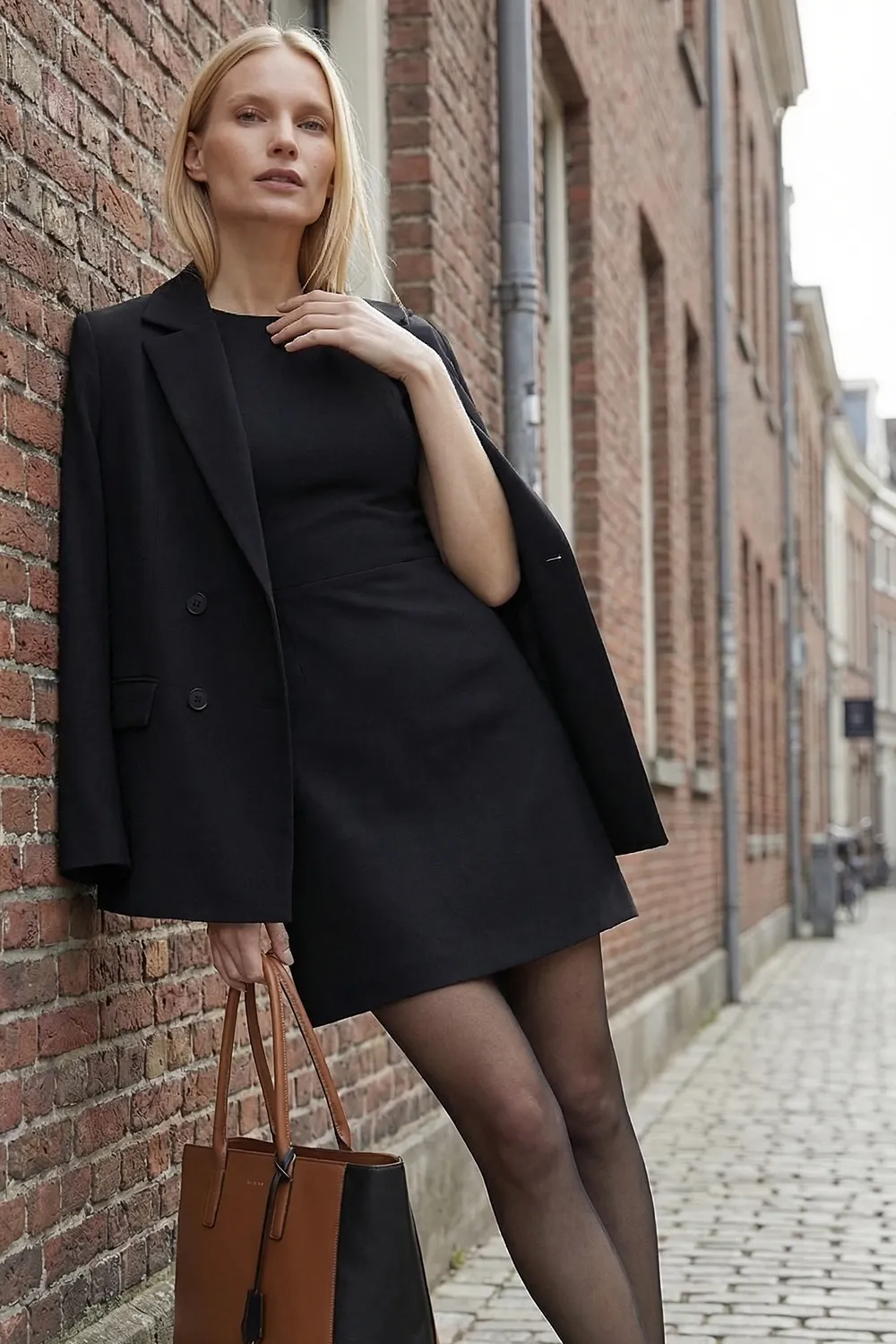 The Jumpsuit Edit: The Ultimate Guide to Versatile Chic
A practical guide to choosing and styling jumpsuits for various occasions: from business meetings to evening events. Learn how fabric, cut, and acc...
The Jumpsuit Edit: The Ultimate Guide to Versatile Chic
A practical guide to choosing and styling jumpsuits for various occasions: from business meetings to evening events. Learn how fabric, cut, and acc...
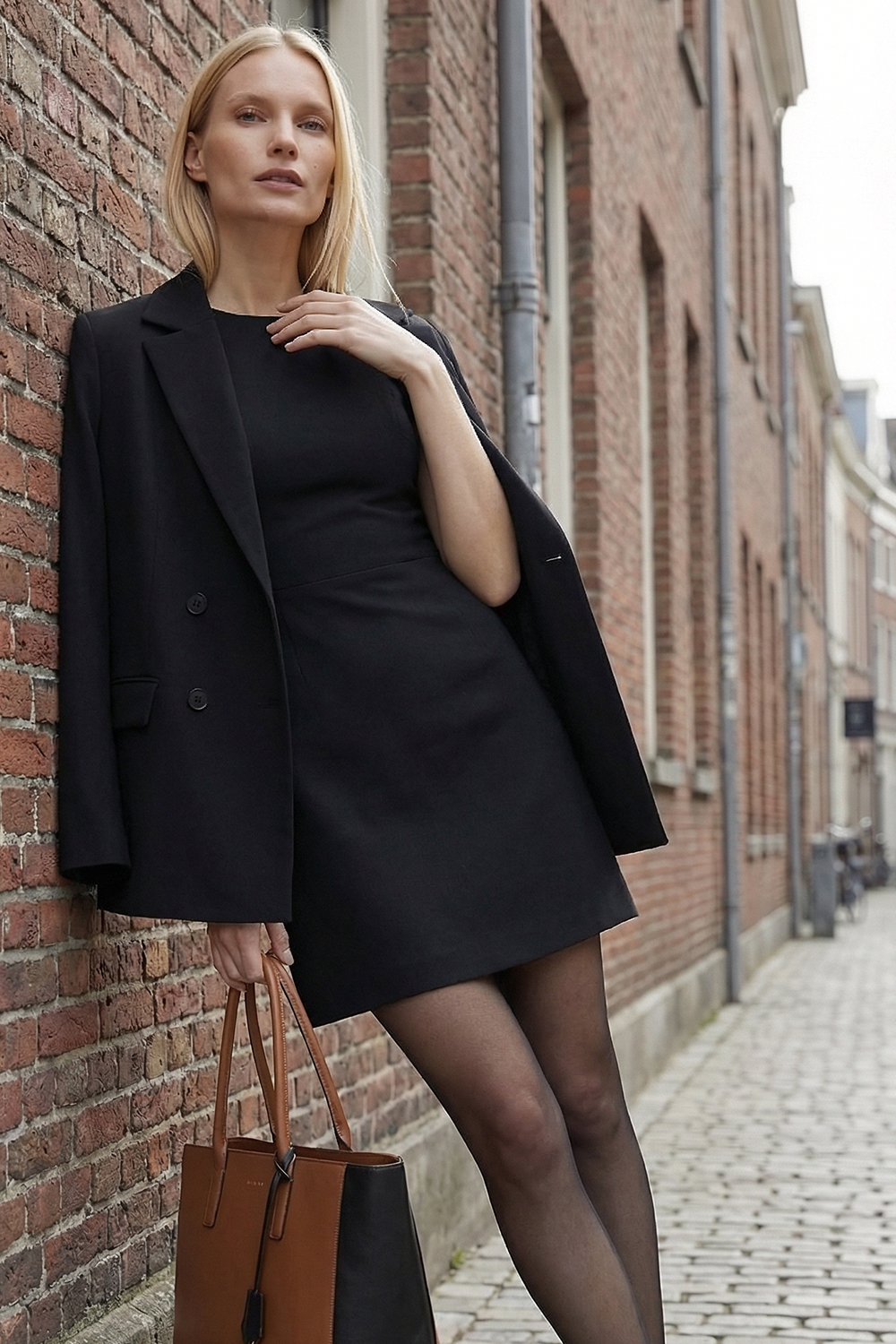 Effortless Elegance: Dresses and Jumpsuits for Fluid Style
Discover a world where elegance requires no sacrifice. In this article, we explore dresses and jumpsuits designed for the dynamic life of a modern ...
Effortless Elegance: Dresses and Jumpsuits for Fluid Style
Discover a world where elegance requires no sacrifice. In this article, we explore dresses and jumpsuits designed for the dynamic life of a modern ...